
For more than a decade The Body Keeps the Score has helped shape how therapists – and the wider public – think and talk about trauma. Bessel van der Kolk’s bestselling book popularised the idea that traumatic experience can affect the body as much as the mind, influencing everything from emotional regulation to physical health long after the original danger has passed.
But does the body really ‘keep the score’? A recent paper in Frontiers in Systems Neuroscience has challenged one of the most influential metaphors in contemporary trauma discourse. In ‘The Body Does Not Keep the Score’, researchers argue that the language used to explain trauma has increasingly been interpreted too literally, helping to fuel misconceptions about what trauma is, where it resides and what is required to heal it.1
Their argument is not that trauma has no bodily effects, nor that van der Kolk’s work should be dismissed. Rather, they propose a different way of understanding what happens after an overwhelming experience: trauma is not ‘stored’ in muscles, tissues or organs waiting to be released but is maintained through patterns of prediction and adaptation within an interconnected brain‑body system. As they put it: ‘The body does not keep the score; the brain keeps predicting it.’1
How trauma is understood – and misunderstood – has significance far beyond the therapy room. The language of trauma science has moved rapidly from specialist clinical settings into social media, self-help and everyday conversation. Along the way, complex and sometimes contested ideas have often been reduced to simple certainties: that the body stores trauma, that talking is insufficient to resolve it and that an ever‑expanding range of ordinary difficulties can be understood as evidence of unresolved trauma. These ideas have a direct impact on our work, shaping clients’ ideas of what has happened to them and what they expect treatment to involve.
So where does the evidence currently stand? Amid a growing backlash against trauma misinformation, do we need to rethink one of the most influential clinical narratives of the past decade?
The metaphor
The idea that trauma is stored in bodily tissues has been taken too literally, says Steven Kotler, Executive Director of the Flow Research Collective, a non-profit research and training organisation studying the brain, and one of the four authors of the paper.1
The idea is still prevalent, however, as evident at this year’s Transform Trauma Oxford conference where somatic experiencing practitioner Betsy Polatin told a packed audience that, ‘There are layers of meaning that are woven into our muscles. There are memories that are etched into our bones and there are stories that are imprinted on our fascial system.’
Kotler and colleagues argue that, rather than being stored, etched or imprinted, trauma likely arises from a combination of faulty predictions, lack of neural flexibility and the feedback loop this creates within the brain‑body system. They suggest that, ideally, as we experience the world, our ‘neural networks continually integrate and segregate in response to context’ through a process they describe as the ‘healthy brain’s metastable dynamics’. Trauma, they propose, represents ‘a reduction in the brain’s dynamic repertoire: connectivity patterns shift toward defensive configurations, and the system’s capacity for flexible reconfiguration is diminished’. Their suggestion is that healing from trauma ‘is not about “releasing” stored emotion but reestablishing dynamic equilibrium’.
Locus of control
Nonetheless, Kotler says, ‘I want to separate what the book says and what happened to the book inside the worlds of therapists, coaches and psychologists. Those are very different things. I have certain challenges with the book itself, but I have a lot of other challenges with where it has gone in popularity. I think the reaction to it has been damaging because it has produced so much victim mindset and external locus of control.’
What is clear is that Kotler comes at trauma from a different direction: while van der Kolk’s perspective was born out of treating clients with PTSD as a psychiatrist, Kotler’s interest comes from his background in action sports journalism and his research into flow and peak performance.
‘The example we use is that you are driving a motorcycle down a freeway and you get cut off by a car,’ he says. ‘You swerve around the car. Same swerve but different internal experiences of that swerve. One swerve produces trauma and could lead to PTSD. The other swerve produces flow, post‑adaptive growth and all kinds of downstream benefits.’ The question for Kotler is: ‘What happens in that two seconds that determines whether you go towards trauma or flow?’
What Kotler is ultimately calling for is a shift in perspective rather than a different course of action. Indeed, many of the effective trauma treatments described in The Body Keeps the Score could be considered successful due to their capacity to restore metastability.
‘The general thinking is that if you look under the hood at a lot of disparate mental health conditions, neurobiologically what they seem to have in common is a loss of network flexibility,’ he says. ‘It seems incredibly likely that flow restores metastability which is literally network flexibility.’
He suggests that post‑traumatic growth can speed healing from trauma. ‘We are learning stuff that might really help us do that. What we are saying is that this is the mechanism, and this explains why all these things are working, and it gives us a therapeutic target.’
Part of Kotler’s optimism is founded on interpreting some of the data used in The Body Keeps the Score differently. ‘The central finding from the research by George Bonanno, who ran the study on the impact of 9/11, is that mostly everybody’s trauma resolves naturally through the course of normal development. Yet a different story is being told in the book. If the body necessarily keeps the score, then cognitive behavioural therapy and exposure therapy would never work. Evidence shows that they can.’
This perspective aligns with the World Health Organization (WHO). According to WHO, around 70% of people globally will experience a potentially traumatic event during their lifetime, but only 5.6% will go on to develop PTSD.2

Steven Kotler, research fellow at Florida Atlantic University
Restoration
Helping to restore client agency has long been a focus of trauma work. If The Body Keeps the Score has disseminated narratives about lifelong trauma, it might have inadvertently discouraged clients from considering their own agency for change.
But this was never the intention, says Janina Fisher, who is widely acknowledged as an international expert on the treatment of trauma and a long‑time colleague of van der Kolk: ‘Back in the 1990s we found that if we educated clients about trauma they did better, rather than simply talking about what had happened to them. Then we got EMDR and more clients did better.
Then we had The Body Keeps the Score and the somatic way of thinking and more clients did better. But there was still a group of clients who couldn’t tolerate any of the above.’
70% of people globally will experience a potentially traumatic event during their lifetime, but only 5.6% will go on to develop PTSD2
Fisher now trains therapists in trauma‑informed stabilisation treatment: a structured, compassionate approach for healing complex trauma that she has developed to meet the needs of this client group.
‘What I found was that not all clients could go into their bodies. Many trauma survivors have a phobia of the body and are unable to be mindful of it. Working with the body requires that the client be mindful, able to collaborate with the therapist and able to follow directions. I’ve moved toward trauma‑informed stabilisation treatment because it combines a somatic way of thinking with a trauma‑informed parts model.’
What does she think about Kotler and colleagues’ criticisms of van der Kolk’s central metaphor? ‘That’s a misunderstanding and a simplification of the message,’ she says.
‘I don’t think that Bessel really wanted to suggest that trauma is stored and you just release it. In the early brain scan research that he conducted, when volunteers remembered the traumatic event, the prefrontal cortex shut down. This meant limited access to verbal memory and expression. What became more active was the limbic system, especially the amygdala. So all these ways of working are designed to stimulate the prefrontal cortex.
‘There is other brain scan research showing that increased activation in the medial prefrontal cortex is associated with reduced activity in the amygdala. Fear memories are held in the amygdala, so most of what traumatised people are dealing with is stimulation of those implicit feeling memories. We want to help people develop a different relationship to their feeling memories, which I think is at the heart of The Body Keeps the Score.’

Graham Music, psychotherapist
Embodied process
In many ways Kotler and Fisher follow the same logic: the brain is centrally important to both of their conceptions of trauma, and they agree that different people require different interventions. They both express concern that therapists are prone to misconceptions of trauma based on their cultural context, including from their training. This concern is shared by psychotherapist Graham Music – author, trainer and former Associate Clinical Director of the Tavistock Clinic’s child and family department.
‘There is a danger in any sort of therapy of focusing solely on content rather than how things are being said,’ he says. ‘How is the client sitting? What is their breath doing? Where is there muscular tension? When we get near something difficult, is an anxiety pathway triggered like a stomach ache or headache or feeling sick?’
Music uses an example from psychodynamic training, where you are expected to type up verbatim transcripts of sessions. ‘That’s words on a page,’ he says. ‘It is hard to put into words the complex, intricate dynamics between two people in a room. For years I have been trying to develop ways of working and supervising that also include the capacity to be in touch with bodies. That might mean getting the supervisee to inhabit the body posture of the client. Something can happen when a therapist feels what it might be like to inhabit the client’s body. It can change things for the client without them even knowing that the therapist has done anything.’
Meanwhile working with trauma can challenge much of what we have learned in therapy training. Without adequate guidance it can be difficult to know how to adapt our approach. Music considers this a limitation of The Body Keeps the Score.
‘The backlash was waiting to happen. People loved the book; it had a profound influence. But many people don’t know what to do with it. Unless you have done body psychotherapy training or some other form of somatic training, people can be scared of working with the body. So how do you hold the body in mind and the mind in the body in a psychotherapeutic session?’
In his 2022 book Respark: igniting hope and joy after trauma and depression (Mind‑Nurturing Books), Music used a central metaphor much like van der Kolk. Reflecting on what it is about metaphor that lends itself to explorations of trauma, he describes ‘the way metaphor arises from a different place. In psychoanalysis we are working with unconscious processes of free association in the client. Also, the reverie: what might pop into your mind as a therapist that may or may not be significant. But it’s not just in your mind; it’s also in your body. The first clue about something might be that my leg is jangling or that my breathing has got a bit shallower or that my muscles are tense. Now that’s not metaphor; it’s quite literal, but it comes from a different place. It’s not a logical place; it’s certainly not a mind place.’

Dr Susanna Alyce, psychotherapist
Lived experience
Relating in less logical and more embodied ways may seem daunting to therapist and client alike. Engaging in this process requires mutual trust within the therapeutic relationship. Dr Susanna Alyce has carried out research with survivors of child sexual abuse and told me why trust is so important.
‘There is a belief in mental health services that survivors of child sexual abuse have had their ability to trust destroyed or warped out of shape. Dentists, GPs, surgeons, therapists can often feel that they are inherently trustworthy. Survivors don’t. So the logic goes that survivors trust the wrong people, or don’t know how to trust at all. But all the survivors I work with say: “Well they’re not trustworthy. When I try and tell them what’s happened to me they do a series of things that retraumatise me. They don’t want to hear; they haven’t got the time; they haven’t got the capacity. They look away; they don’t give me respect, so I have stopped telling them.”’
Trust, Alyce says, manifests both physiologically and psychologically. When working with trauma we may have to consider how to promote trust not just through what we say but also how we are.
‘In my research survivors were asked: “How do you know that you trust somebody? Where do you feel it in your body?” They expressed a felt sense of the person they were with. It was just who they were; it was just the feeling, or the opposite. “It was the shiny suit he wore, the way he rushed in; he didn’t look me in the eyes.” So there is a body language component to what is and isn’t trustworthy. That wasn’t broken in survivors, but the parameters were very tight.’
Like Music, Alyce warns against the dangers of therapeutic approaches being inflexible, and links back to Kotler and colleagues’ criticisms of The Body Keeps the Score.
‘I don’t think the phrase “the body keeps the score” was ever meant to be accurate to the neurobiology of how the human organism stores or processes trauma. I think it highlighted that trauma is physiological as much as it is mental. For me that’s the crucial thing about trauma. If you are approaching it simply from a neuroscience perspective you might miss the opportunity for the survivor to heal because that is an embodied process. If you only look at it through the point of view of what’s happening in the mind you’re missing a huge amount that you need to help somebody process trauma.’
Systemic response
Alyce’s research highlights how not only therapists but services themselves can inadvertently perpetuate rather than accommodate trauma. Clients who have faced adverse life experiences may find engaging with services retraumatising. Dr Asha Patel founded Innovating Minds, an award‑winning social enterprise, to help tackle these kinds of systemic issues.
‘Not every child needs therapy. Frontline practitioners can provide that support. Our model is around upskilling frontline practitioners who work with children and families – so health workers, people in family hubs, schools, who are not necessarily clinically trained – and giving them access to evidence‑based interventions. Children can then access help and support from people they already know and trust, in spaces where they already feel safe. This model means that there is no wrong front door and you don’t have to meet a threshold via assessment. It also means people aren’t digging around in children’s histories or getting them to relive their trauma.’
Patel’s work is based on her vision for a trauma‑informed society, promoting access to help when needed and with the appropriate support systems in place.
‘Often what you see is that the problem is located within the child or adult when it’s the system that is retraumatising them. If we change the system and make it supportive for everybody, regardless of whether they have trauma or not, it benefits everybody, including the staff.’
Innovating Minds’ therapeutic resources are accessible and easy to understand. ‘The important part is how to simplify what the trauma‑informed practices are saying so that it lands and influences practice,’ Patel says. ‘Currently a lot of training raises awareness but hasn’t translated that into practice. I think that is the next biggest hurdle. We have become more trauma aware, but how do we become more trauma informed within our practice so that families and children start to feel the difference?’

Dr Asha Patel, clinical psychologist
Structural change
Ton Mazzone, the filmmaker behind recent documentary Traumality, shares this vision for change at a structural level. In his documentary he details his own lived experience of trauma. ‘When I first sought help for my mental health the questions they asked were about the last two weeks of my life. I was given a diagnosis and a pill and there was no check‑in. I struggled for so long and had to go out looking for the answers. I feel like the doctors should have known that past experiences shape how we react to the world. I should have been taught this at school. Just some psychoeducation would have been a massive help in itself. And they could do that.’
He hopes that his film will play a part in making structural change happen. ‘I wanted to create the resource I wish I had stumbled across – a resource that healthcare professionals and schools could learn from. Already I’m having conversations with schools and not‑for‑profit organisations that want to use it in their training.’
What now?
With all this in mind, how can therapists determine the best ways to progress their clinical work with trauma? At the end of The Body Keeps the Score, van der Kolk tells us: ‘The choice is ours to act on what we know.’3 Unfortunately, in the information age, what we know is not a fixed point.
Science develops at speed and is open to interpretation. Or as Kotler puts it: ‘Somebody has an idea. It raises questions. We answer those questions and we move forward.’
Perhaps therapists need to model some of the flexibility we seek to cultivate in our clients. Patel says: ‘It’s important to ask yourself as a therapist: “Does this align with my approach, my values and how I would like to practise?” If it doesn’t you are trying to fit a square peg into a round hole, and that is a disservice to the people we are here to serve.’ Part of this process involves seeking guidance from colleagues.
For Music it’s about ‘making sure we have a sufficient understanding to do that work. If we don’t we need to seek out people who can help us. It doesn’t have to be further training; it could equally be a good supervisor. For me it will always be reading, watching, talking to people and getting as much help as I can from my colleagues.’
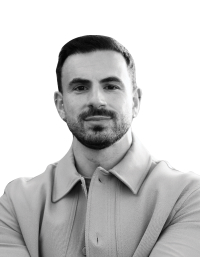
Ton Mazzone, filmmaker
Professional development
For those of us who are committed to working with trauma it may be difficult to know whether to pursue general or specialised training. Fisher says that we shouldn’t feel the need to limit ourselves: ‘If you are a therapist who feels moved to help traumatised clients then, in a perfect world, you would have an opportunity to have specialised training in one or more trauma‑informed approaches.’
With such an enormous amount of knowledge, experience and insight about trauma at our disposal, therapists may feel unsure of where to focus their energy. When our core texts are challenged we may feel that the foundations of our understanding are being undermined. But Mazzone’s outlook is hopeful: ‘Trauma science evolves. Let’s just use all of that, as long as we are using science to help things evolve and not to shut people down.’
This kind of consensus can sometimes feel difficult to achieve. One of the concerns for a panel addressing Kotler and colleagues’ paper at the Transform Trauma Oxford conference was the paper’s provocative title. In a session entitled ‘The Future of Trauma Therapy’, speaking alongside van der Kolk, Fisher, Prentis Hemphill and Wendy D’Andrea, Dr Scott Lyons, author of Addicted to Drama and a body‑based trauma specialist, described it as ‘clickbait’. Van der Kolk said: ‘I’m sorry that they wasted time that they could have spent on something more useful.’ Here, at least, the paper’s title seems to have undermined Kotler’s desire to engage in meaningful scientific discourse.
Trauma seems to be, more than ever, part of the zeitgeist, but perhaps we are still learning how to talk about it societally. Progressing our collective understanding of trauma will require us to engage with challenges to the orthodoxy of our core texts. Hopefully this can happen in ways that feel like moving forward rather than attacks. The good news is that this is a process we can all be involved in through therapy, research and broader systemic changes.
Wendy D’Andrea’s final thoughts felt especially pertinent: ‘This field will not survive if we keep people on pedestals and treat people like gurus. This field needs all of us.’

Wendy D’Andrea, clinical psychologist
References
- Kotler S, Mannino M, Fox G, Friston K. The body does not keep the score: trauma, predictive coding, and the restoration of metastability. Frontiers in Systems Neuroscience 2026; 20: 1-5.
- Kessler RC, Aguilar-Gaxiola S, Alonso J, Benjet C, Bromet EJ, Cardoso G, et al. Trauma and PTSD in the WHO world mental health surveys. European Journal of Psychotraumatology 2017; 8(sup5): 1353383.
- van der Kolk B. The body keeps the score. London: Penguin; 2014.