
Brooklyn Beckham giving his popstar mother and footballing father the boot. Prince Harry abdicating from amity with King Charles and Prince William. From Brad Pitt’s children calling ‘Cut!’ on their relationship with dad to Meghan Markle deciding that maintaining paternal contact doesn’t suit her, and splashy headlines about Olympic swimmer Adam Peaty marrying without his parents being present, the media seems awash with news of celebrity family splits. Papers and magazines warn how TikTok ‘estrangefluencers’ and Instagrammers encouraging ‘cut-off culture’ are ‘incubating a silent epidemic’ and ‘a growing movement... of people going “no contact”’ with relatives.1-3
The impression given is that the combined behavioural drivers of famous trendsetters and social media sway are creating a never-before-seen surge in kinfolk lumberjacks quick to axe branches of their family trees with little inclination to work on improving bonds and giving little thought to the potential future impacts of familial deforestation.
But is estrangement really a fashion on the rise? What do the statistics say – if we have them at all? And how does this map onto the reality that LGBTQ+ clients have been navigating family alienation long before YouTube and X existed?
Increasing estranger danger?
I’m not comfortable with narratives asserting that estrangement’s increasing, because we don’t have solid data from longitudinal studies,’ says Karl Melvin, a psychotherapist who’s specialised in family conflict for more than 14 years. Commonly cited research includes a 2025 YouGov poll of 4,395 American adults in which 38% reported being currently estranged, most frequently from a sibling (24%), parent (16%) or child (10%).4 As ‘proof’ of an upward trend, this is often contrasted with a Cornell University study from 2020, which estimated a lower rate of one in four US adults alienated from a family member.5 ‘But the investigations being compared employ different cohorts, methodologies, definitions and agendas,’ counters Melvin. ‘And some polls are closer to market research than proper empirical studies.’
Many UK figures used to come from prominent estrangement charity Stand Alone, which shuttered in 2024; a surprising development, perhaps, if family ruptures are truly exploding, although challenges in running an organisation aren’t de facto indicative of a lack of demand for its services. ‘Research on reconciliation is inconsistent too,’ Melvin adds. ‘For example, there’s no universal agreement on how long a re-established connection must endure to count as “recovered”. And just because relatives are talking again doesn’t mean those conversations are positive.’
Yet while data may not unequivocally establish whether the rate of family tiecutting is climbing, it seems more certain that attitudes towards estrangement are changing – and that media and online discourse are contributing to making the concept more visible and less taboo, and individuals are more vocal about it.
‘I too am unconvinced we’re necessarily seeing greater estrangement than previously, but we’re definitely witnessing it being more openly discussed, named and in some cases consciously chosen,’ states clinical psychologist and psychotherapist Christine Schneider, author of the quarterly ‘Ethics’ column in BACP’s Private Practice journal. Exposure to internet-sourced psychoeducation means ‘clients are arriving in therapy with far more developed language around emotional needs, identity and autonomy than a decade ago and that’s inevitably bringing long-standing family tensions into sharper focus. Plus, the cultural permission to set boundaries where relationships feel psychologically unsafe or persistently invalidating has shifted.’
Under the influence?
Ben Cole-Edwards is one of the influencers feeding into this societal evolution. He broadcasts content detailing his own three-year estrangement from his mum to around 1.4 million followers across TikTok, Facebook and Instagram. ‘In my most popular videos I act out being the healed version of myself, conversing with my hurting, confused past self,’ he explains. ‘People respond most strongly to watching a chat unfold that they can relate to, and recognising themselves unprompted in my scenes, rather than me directly telling them “This is your issue and here’s how to fix it”.’
Cole-Edwards rejects the charge that content creators like him might push viewers towards estrangement, arguing that such an idea can only be seeded in ground already made fertile by turmoil and ploughed with deep, old furrows of turbulence. ‘If your family’s largely healthy you’ll scroll past my content unaffected,’ he says. In his view he presents the pathway of cutting off family as a last resort that nevertheless shouldn’t be out of bounds for those who need it – but sees little risk, as cynics fear, of anyone making a snap decision to ice out a relative on the basis of a few 30-second clips.
‘The people I most frequently hear blaming TikToks or Reels for causing estrangement are parents who’ve been renounced by their kids and are looking for an easy out to deflect to, rather than examining dysfunctional dynamics and addressing where they might be accountable,’ says Harriet Shearsmith, who has 185,000 Instagram fans. She’s authored two books focused on parenting as an estranged adult child and hosts the podcast Unfollowing Mum, billed as helping listeners ‘navigate estrangement and toxic family […] in the digital age’.6,7
Shearsmith feels the choice to terminate relationships with family is becoming less demonised by an advancingly individualistic Western society, parallel to how divorce has become more acceptable and accessible. ‘Whether it’s a bad romance or a bad relative, a marriage or a mother, we’re recognising that nobody should feel obligated to remain in relationships at any cost,’ she says. ‘But that’s not to say estrangement doesn’t carry dear costs of its own.’
Reece,* 28, says the social media that influenced him to cut off his brother was his sibling’s own Facebook posts. ‘He’s a racist, misogynistic Reformer who doubled down every time I tried engaging him in constructive debate,’ he sighs. ‘He posts vitriolic rants about me too. His echo chamber endorses his viewpoints without knowing the whole picture.’ Reece’s mum accuses him and his generation of being ‘too quick to walk out, rather than work things out’, and warns he’ll regret not mending the rupture in future. Yet Reece feels his brother is the one refusing to try: ‘Effort to meet in the middle can’t be unilateral. And he’s not someone I’d ever have associated with if we hadn’t by chance shared a womb. Genetic links are over-romanticised.’
Different generational convictions about the pre-eminent significance of family are common,’ says Karl Melvin. ‘Similarly, I’ve encountered clients who say “Mum, you hit me as a kid – that’s assault”, and mothers who answer “No, I only spanked you to discipline you – that’s parenting”. There are semantic and perceptual generational differences in what’s viewed as an acceptable, ethical upbringing.’

Karl Melvin, psychotherapist
LGBTQ+ minus family
The framing of estrangement as the latest fashionable fad may seem particularly egregious to members of the LGBTQ+ community who have a decades-long collective history of heartbreaking familial rejection, and many of whom have been forced to separate from relatives for the sake of their safety – even their lives.
‘I’ve read accounts of my gay brethren being subjected to “queer cure” lobotomies and electroshock treatment in asylums where they were incarcerated by their families in the 1960s, and spoken to elders in my activist circles whose own siblings threatened to shop them to police for b****ry in the 1980s,’ says Faizan,* 36. ‘In my case, my parents are strict Muslims who veto queerness as haram and believe punishment by death is justifiable. Their fury at my homosexuality is compounded by them being Pakistani migrants who view my identity as a shameful snub to being a “good immigrant” and disrespectful of how hard they worked to raise me in the UK. My need to escape them was motivated by survival, as it has been for countless queers through the ages. It has nothing to do with Brooklyn Beckham.’
Marki,* 26, understands this righteous anger but also thinks the current hype about estrangement has plus points – and cautions against belittling those considering reducing or ceasing family interactions even when their problems don’t ostensibly seem extreme. ‘I laughed wryly to myself recently when a mate mentioned “going no contact” with her mum; she meant she was skipping one regular weekly phone call because they’d had a tiff,’ Marki recounts. ‘As someone estranged from my parents since my teens because I’m genderfluid and pansexual, I could have been offended by her flippant co-option of that terminology, but actually I’m glad she’s been prompted to consider her boundaries. It’s not the Victimhood Olympics; everyone’s relationships matter, and I didn’t mind gently educating her on the true gravity of an online buzzword she’d picked up.’
Marki hesitated to take their own childhood abuse seriously since they ‘didn’t look like the battered, neglected NSPCC ad kid – I got private schooling and holidays abroad’. ‘The damage was predominantly psychological: I was repeatedly told that I was wrong about my own gender and sexuality. I was relieved when Dad fractured my wrist as I finally had a “good enough” reason to break contact.’
‘One of the most important things that often gets missed in conversations about estrangement is the role of invalidation,’ comments psychotherapist Julia Summers. ‘What sits beneath a lot of splits is an abiding experience of not being listened to, having feelings dismissed and being made to feel like the problem.’ Silva Neves, a psychotherapist specialising in LGBTQ+ care, reflects how robust client-counsellor rapport must thus demonstrate respect and safe-space practices at all levels, ‘from microaffirmations like asking about pronouns to believing clients when they describe awful experiences like religious “exorcisms” involving mental and physical torture. It might seem inconceivable that such activities happen, but sadly conversion practices are still legal in the UK, and even in 2026 there are parents who claim they’d rather have a dead child than a gay one.’
In a national Government survey of LGBTQ+ Britons, around 6% of secular respondents, 10% of Christians and 20% of Muslims reported undergoing or being offered ‘conversion treatments’, with trans respondents most likely to have been pressured towards ‘reparative cures’.8 Sixteen per cent of individuals who’d endured conversion ceremonies said they’d been directly carried out by family members as opposed to faith organisations (51%) or healthcare providers (19%).
‘Some parents feel that as they “created” a person they should have greatest say over who they are, and interpret questions about identity as criticism of their creation,’ says therapist Shae Harmon, themselves queer, trans and non-monogamous. Anecdotally Harmon observes considerations around cutting off family to be an increasingly common concern in their therapy room, particularly among transgender clients. ‘It’s unsurprising given the broader political landscape of LGBTQ+ identities being rampantly villainised, and the targeting and elimination of trans people’s human rights and access to healthcare,’ they say. Relatives’ viewpoints are frequently fuelled by their consumption of hateful online material and phobic media. ‘Queer folk report their feelings being deprioritised and minimised by family members who express being burdened by them or feeling entitled to have invasive questions answered.’

Ben Cole-Edwards, influencer
Assumptions and oversights
Therapists shouldn’t assume that queer clients’ estrangement issues are always rooted in their queerness, however. ‘I’m a non-binary lesbian who cut off my dad,’ says Ria,* 30. ‘A counsellor automatically presumed he was homophobic; actually he was an alcoholic. It felt like going to the doctors as a fat person and automatically being told the problem was my weight.’ Therapist Gavin Conn has been estranged from his mother for 13 years. ‘She loved that I was gay as it gave her celebrity status in our small town,’ he notes. ‘She’s a vengeful, cruel woman, but she bragged about her queer son.’
Psychotherapist Miriam Grace specialises in working with lesbians who come out later in life. She highlights how parents whose adult children reject them when they learn of their true sexuality or gender identity tend to be forgotten in dialogue about estrangement. ‘Many women currently in midlife grew up under Section 28 against a homophobic and sexist backdrop that socialised them to consider others’ needs before their own, and have low expectations of their sexual satisfaction. They were told that if they wanted babies they must be straight,’ she explains. ‘Consequently I see lots of lesbian mothers who don’t leave the closet until their 40s, 50s or 60s – right when menopause adds its own extra chaos. I hear how their children brand these revelations as selfish, unmaternal, or as frivolous thrill- or attention-seeking.’ Offspring might recontextualise their existence as the product of a ‘trick’ or non-consensual partnership, or worry about what else their mother has ‘lied’ to them about – emotions that can calcify into rejection. And while the concept of self-serving absent or ‘deadbeat’ dads is – while not approved of – societally familiar, for mothers to make ‘egocentric’ decisions at the expense of losing their children is arguably far more taboo, heightening alienated queer mums’ pain and shame further.
Split decisions
So what should good therapy look like in the context of exploring LGBTQ+ estrangement? ‘Our jobs as therapists are to support clients to make the best authentic, autonomous choices about family for themselves – unbiased by how our own decisions or experiences pertaining to relatives may have panned out,’ advises psychotherapist and associate lecturer for Pink Therapy DK Green, himself a transgender man. ‘They may want to accept an inadequate or even harmful relative for who they are in order to preserve a relationship – but with healthier boundaries. Or they may decide to close doors.’ Green introduces assertiveness training for clients who need to learn the tools to verbalise and persist with their choices.
‘If there’s risk of serious physical or psychological violence, and the therapist is highly concerned about their client’s daily wellbeing, they can raise concerns and challenge the client’s thinking,’ says Neves. ‘But usually, rather than steering towards reconciliation or separation, I help clients gain clarity by thoroughly examining all options, their practical and emotional consequences and the life events and societal messages that may inform the client’s thinking and feelings.’
It’s crucial that counsellors pay close heed to their own areas of cultural ignorance lest their overconfidence damages a client’s faith in therapy – or they unwittingly frame dangerous moves as safer choices. ‘UK studies show that when therapists fail to understand the causes and consequences of estrangement, including cultural dimensions and coercive control within family systems, therapy is experienced as unhelpful or actively harmful,’ warns Julia Summers.9
‘I’m a gay Black woman raised within an intensely tight-knit African church community,’ says Chidima,* 22. ‘The NHS referred me to a therapist who could not grasp that going no contact with my aggressive, queerphobic parents would not just leave me homeless but under threat of attack unless I drastically relocated – the suggestion I apply for a local council flat was ludicrous.’
Despite policy developments like the Student Loans Company’s move to allow estranged under-25s’ educational support to be assessed irrespective of their parents’ household income (introduced in 1997 for England but not until 2016 for Scotland), oftentimes estrangement has financial ramifications therapists should be wise to. ‘A young person looking forward may not see the same things as an older person looking back, like the impact of not having family assistance with childcare, money or healthcare,’ notes Miriam Grace.
Gavin Conn says training in bereavement and grief is invaluable. ‘Estrangement involves endings and losses, and shares many of the same landmark moments and emotional triggers as a death,’ he reasons.
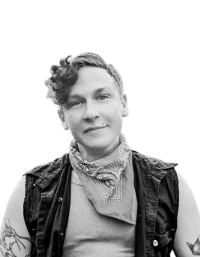
Shae Harmon, therapist
What’s next?
In his role as a forensic therapist who works with criminals who’ve committed sexual offences Conn encounters relatives of offenders under pressure to cut them off. ‘The spouses and parents of people who’ve accessed child sexual abuse material online, for example, are asked how they can still love their husband or speak with their son,’ he says. ‘I wonder if the prevalence of extreme internet pornography giving rise to growing numbers of young offenders who still live at home will raise more questions about whether parents should kick out and alienate their children in such situations, or support them with a view to rehabilitation.’
Miriam Grace hopes mainstream conversations about estrangement will become more nuanced and less focused on binaries. ‘In many cases I prefer the approach of “turning down the volume dial” on problematic relatives rather than dramatic total-cut-off “pendulum swings”,’ she muses.
In any discussion of estrangement I make it clear that it doesn’t have to last forever,’ says Shae Harmon. Marki agrees: ‘The only definite thing to last should be self-respect.
Summers points out the grim irony in the fact that LGBTQ+ people are more prone to becoming estranged from families while also being ultra vulnerable to problems that would benefit from the very kind of protection and backing healthy families provide. ‘Large-scale studies found that gay, lesbian and bisexual adult children are more likely than their heterosexual counterparts to be estranged from their fathers, for example,’ she says.10 ‘Yet research by Stonewall and SafeLives highlights both the prevalence of abuse within LGBTQ+ relationships and the particular barriers to accessing support – including a lack of inclusive responses from services.’11,12 When families turn queer folks away; partners turn malevolent; and systems and organisations that ought to help turn their backs, welcoming and well-equipped therapists are needed more than ever. Answering this urgent call should be our key goal – not allowing titillating tabloid tales about the Beckhams to take our eyes off the ball.
- Names have been changed to protect privacy, but to retain context where necessary, aliases reflect interviewees’ cultural heritages.

Julia Summers, psychotherapist
References
1. Lytton C. Unpicking the rise in young adults cutting off their parents. Grazia. 9 March 2026. graziadaily.co.uk/life/real-life/cut-off-culture
2. Shepherd T. A ‘silent epidemic’ of family estrangement is on the rise – even if your parents are not Beckhams. The Guardian. 23 January 2026. theguardian.com/australia-news/2026/jan/24/ family-estrangement-children-parents-beckhams
3. Russell A. Why so many people are going ‘no contact’ with their parents. The New Yorker. 30 August 2024. newyorker.com/culture/annals-ofinquiry/ why-so-many-people-are-going-nocontact- with-their-parents
4. YouGov. Family estrangement: how often and why it happens. 7 August 2025. yougov.com/en-us/articles/52733- family-estrangement-how-often-and-why-ithappens
5. Pillemer K. Fault lines: fractured families and how to mend them. New York: Avery; 2020.
6. Shearsmith H. Unfollowing mum: break unhealthy patterns and be the parent you wish you’d had. London: Vermilion; 2024.
7. Shearsmith H. Cycle breakers: free yourself from emotionally immature parents and be the parent you wish you’d had. London: Zeitgeist; 2025.
8. Government Equalities Office. National LGBT survey research report. July 2018. assets.publishing.service.gov.uk/government/ uploads/system/uploads/attachment_data/ file/721704/LGBT-survey-research-report.pdf
9. Blake L, Rouncefield-Swales A, Bland B, Carter B. An interview study exploring clients’ experiences of receiving therapeutic support for family estrangement in the UK. Counselling and Psychotherapy Research 2023; 23(1): 105-114.
10. Reczek R, Stacey L, Thomeer MB. Parent-adult child estrangement in the United States by gender, race/ethnicity, and sexuality. Journal of Marriage and Family 2023; 85(2): 494-517.
11. SafeLives. Free to be safe: LGBT+ people experiencing domestic abuse. SafeLives: Bristol; 2018.
12. SafeLives. Insights Dataset 2023. SafeLives: Bristol; 2023.
13. Liu RT, Mustanski B. Suicidal ideation and self-harm in lesbian, gay, bisexual, and transgender youth. American Journal of Preventive Medicine 2012; 42: 221-228. ajpmonline.org/article/S0749- 3797(11)00917-2/abstract