
The UK was shaken last year by the inquest into Paloma Shemirani’s death. Paloma had died aged 23 from blood cancer in 2024 and, after hearing evidence from Paloma’s brothers, the coroner ruled that her mother Kate, an active conspiracy theorist who campaigned against conventional medical practices, had contributed to her death by influencing Paloma’s decision to reject chemotherapy.
During the pandemic we saw a rise in scepticism about conventional medical treatment along with an increased loss of trust in experts and governments and a rise in engagement with misinformation.
Trust has fallen globally to such an extent that it’s been described as a ‘trust recession’, a culmination of several factors, including global instability, economic recession, questions about ‘fake news’ and growing distrust of online information and traditional institutions. In 2024 the National Centre for Social Research’s 41st British Social Attitudes survey found that a record high of 45% of respondents now say they ‘almost never’ trust governments of any party to place the needs of the nation above the interests of their own political party (22 points above the figure during the height of the pandemic in 2020).1 Perhaps not surprisingly, younger generations who have grown up in this cultural landscape are particularly subject to this new demographic trend. In 2025 Channel 4 proposed a ‘trustmark’ for content accuracy in a bid to prevent dis- and misinformation.2
Although the wider trend towards mistrust is most visibly directed towards the healthcare industry, the therapy profession is also impacted. As well as potentially undermining trust in the efficacy of what we do, it creates the ethical dilemma of how we work with clients affected by these issues.
Had Paloma turned up to the therapy room, how might her therapist have worked with her?
‘People do not reject treatment because they are reckless,’ says Tina Chummun, a psychotherapist in private practice in Kettering who’s had experience of several clients who have struggled to cope with diagnoses. ‘They do it because something in their history, their body or their identity makes the alternative feel safer.’
Ultimately, when a client refuses treatment, the therapeutic task is not to ‘correct’ their decision but to help them understand the deeper emotional landscape that led them there, Chummun says: ‘A therapist’s job is to bring that story into the light and to empower clients to really think through their health decisions for themselves, by separating it from the familial voices they may otherwise be hearing and believing.’
One of Chummun’s own clients was given a serious diagnosis and told her GP she was declining chemotherapy in favour of herbal detoxification. ‘We explored the grief she carried from previous losses, the belief that treatment equalled helplessness, and her need to maintain control,’ she says. ‘She eventually sought a second medical opinion. Another client grew up in a household where herbal medicine, religious healing and community wisdom were the first line of health support. When her diagnosis arrived, she automatically sought guidance from cultural healers. We discussed what healing practices felt most familiar to her, where she felt pressure to choose one path over another and how she balanced cultural loyalty with personal wellbeing. She remained committed to her alternative path but felt far clearer on her reasons, which made her decision more grounded and less reactive.’
Misinformation
Jenny England has worked as a counsellor in the NHS for 10 years and her ‘bread-and-butter’ work is with people with cancer diagnoses. People who are given a serious diagnosis will be more vulnerable to misinformation because of the urgency of what they’re facing, she explains: ‘They might also be more vulnerable to misinformation if they are diagnosed through routine screening as opposed to symptoms. If you feel great but a doctor says you have cancer and it’s really serious, it doesn’t make sense.’
There are practical approaches therapists can take in some cases, she says. ‘If you know something to be untrue or unreliable or unsafe, you might talk more explicitly – “I’m concerned about you here” or something like that,’ she says. ‘Where if it’s less black and white I might just be a bit more directive, encouraging the client to verify the information they’re talking about.’
Specialist supervision is advised when working in this area: for therapists who are worried about a client’s vulnerability to misinformation, supervision comes into its own for safeguarding and managing any countertransference.
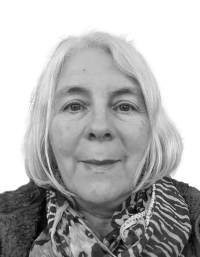
Therapists may themselves have experience of making independent decisions about medical treatment. Dr Cordelia Galgut is a counselling psychologist who herself chose not to pursue some treatment recommended after a cancer diagnosis in 2004, having been misdiagnosed at first.
‘I didn’t entirely go down the evidencebased route after being diagnosed with cancer, in that I refused the gold standard of post-surgery and radiotherapy treatment at that time, tamoxifen,’ she says. ‘I was told by my medical team that a decision not to take tamoxifen was ill-advised and their belief was that in rejecting this drug, I would be upping my chances of recurrence quite considerably.
‘I was in therapy at the time, to help me cope with my diagnosis. My therapist had endured cancer herself, so she got my dilemma – my strong feeling that it was the wrong drug for me but realising it was deemed a lifesaver – and supported me with it. I think it can be hard for a therapist to understand unless they have crossed over onto the cancer side of the fence.’
Galgut still stands by her decision: ‘For people with still-present cancers, sometimes side effects of treatment can outweigh the possible benefits. Weighing this up would always have to be on a case-by-case basis. In the case of Stage 4 cancer it can be the case that people stop chemotherapy because they’d rather have a better quality of life for whatever time they have left. There are also people diagnosed with cancer, but at an earlier stage, who choose not to have all the prescribed treatments because they are worried about immediate and long-term effects, and are willing to take that risk. That was what I did in refusing tamoxifen. My decision wasn’t advised but I felt strongly that it was not the right drug for me and I was prepared to take the risk.’
Defining scepticism
Therapists may face difficulties deciding what constitutes scepticism – after all, what makes scepticism particularly challenging to deal with in the therapy room is that it can be difficult to define. What is scepticism to one person may be self-preservation to another. Cultural and religious backgrounds can also inform belief systems.
At times, challenge to the status quo is needed: for example the COVID-19 Inquiry has found that the UK Government did ‘too little, too late’ and individual decisions to self-isolate and quarantine were vindicated in time.3
But while informed scepticism about the quality of ‘expert’ advice is to be embraced, scepticism informed by misinformation puts clients at risk.
Rising numbers of people are choosing not to pursue medical treatment or are showing hesitancy around vaccinations such as the measles vaccine. In a 2025 report, the Royal College of Paediatric and Child Health authors reported that a decade on from achieving ‘endemic measles elimination’ in the UK (meaning effectively no community transmission at all), measles vaccine coverage has now fallen below 90% for three years in a row.4

Tina Chummun, psychotherapist
‘Conspiracy’ clients
Tom* got into conspiracies at 14 and didn’t get out until he was 26. He was drawn to ideas that the world might end in 2012, and when it didn’t, realised he needed to work out what he was going to do with the rest of his life
It was a simplified way of looking at the world,’ he says. ‘There were obvious good guys and bad guys and a reason for everything that happens. It was ordered and under control: even if the people in control are evil and actively doing harm, someone or something is in control. A universe that’s just random where bad things happen to good people for no reason is much scarier to accept.’
Tom went on to study psychology, spent a year in private CBT at the end of the pandemic, and has been receiving EMDR on a weekly basis since 2022. He credits going back into education and getting therapy for his exit from conspiracy theories.
‘Once I started going to therapy and talking about my past I got lots of support from my therapists for the work I did to question my own beliefs and contending with difficult realities that the conspiracies made easier to digest,’ he says.
He is aware of emerging research on conspiracy mentality and now speaks openly about his experience in misinformation. ‘In the research I did looking into conspiracy beliefs I found that it was often tied to anti-authoritarian views, which themselves often stem from being abused by an authority figure as a child,’ he says. ‘I often joke that being a libertarian isn’t a political position but a trauma response. I think most if not all conspiracy believers are probably survivors of abuse or some other form of trauma.’
On the one hand, if we’re being clientcentred, we meet clients where they are at. But where does safeguarding belong in client-centred work? Can we hold clients in a way that challenges but maintains the therapeutic alliance? And how can we do all this within the Ethical Framework?
Epistemic trust
Epistemic trust – trust in the communication of social knowledge – is a key component of the therapeutic alliance, even if most therapists wouldn’t use this technical term to describe it.
In 2020 the COVID-19 pandemic brought this concept out of the consulting room and onto the global stage. During the collective trauma of the pandemic all of us were forced to think more deeply about who and what ‘social knowledge communications’ to trust and when to be more vigilant.
It has been observed by a number of researchers that this period was ripe for the spread of misinformation including conspiracy theories. This period also marked the launch of new research into the relationship between epistemic trust and conspiracy theories.
A 2023 study of around 400 UK subjects found that mistrust was ‘associated with the endorsement of a conspiracy mentality’ even when accounting for factors such as narcissism, attachment avoidance and anxiety, authoritarianism and loneliness.5
45% of respondents now say they ‘almost never’ trust governments of any party
The next year, in a study of more than 1,200 UK adults, researchers found that participants at both extremes of credulity of mistrust were both more likely to believe conspiracy theories and ascribe to vaccine hesitancy.6 Findings from the studies also showed that people who experienced adversity in childhood are more likely to end up not trusting information they are told but also believing things too quickly.
Research is growing on the relationship between adverse childhood experiences (ACEs) and conspiracy theories. For example, a German study of around 500 people from 2023 found a significant association between ACEs and conspiracy endorsement.7
BACP previously awarded a grant in 2023 for research into this topic. Researchers at Newcastle University won funding to see how therapists could repair ruptures in the therapeutic alliance with young people who displayed epistemic mistrust.
BACP also gave a secondary data analysis grant to Dr Elizabeth Li, who studied roles of epistemic mistrust and alliance rupture in dissatisfied dropouts from psychotherapy for her PhD at University College London. Not surprisingly she found that low epistemic trust in clients led them to perceive social communication as unreliable, preventing them from fully benefitting from relationships and communities.8

Jenny England, counsellor
Avoidance strategy
For most therapists scepticism is a rare challenge, but for others it has become a niche. Rick Cox MBACP is a psychodynamic psychotherapist in Buxton who specialises in working with clients who got into conspiracy theories (he estimates around a fifth of his workload fits this description).
His specialism came from his own experience of getting interested in misinformation and conspiracy narratives for a two-year period in his late 20s. Cox studied for a psychology degree as a mature student but struggled with the academic pressure as well as coping with a chronic condition at the same time. Although Cox did not have personal therapy during this period he has done since. He says the experience has equipped him to empathise with clients who have also fallen down ‘the rabbit hole’.
‘The drift into conspiracies was a defensive strategy,’ he says. ‘I’d been in various jobs beforehand, not really feeling like I was able to actually specify what I wanted to do until I hit a stage in my mid 20s. I went back into education and started to realise a sense of autonomy and agency.’
Cox says this experience still supports his work with clients today. ‘Looking at conspiracy theories as an avoidance strategy is a really helpful way to start to separate the person from the problem,’ he says. ‘Often when clients come to therapy with this material they’re so enmeshed in it, it’s become part of their identity, part of their character. We get them to see that, contemplate that and start to challenge it themselves.’
Challenging a conspiracy allows Cox to explore the avoidance. ‘When you start to want to highlight themes of devaluation, and forfeiting the self, you can think of all the things that you’re forfeiting in reality to get enmeshed in this,’ he says. ‘Where when we come to admit that, which is what a lot of clients tend to do in the mid to later stages of therapy, we’re fostering acceptance.’
Cox is well aware that clients with a conspiracy mentality or mistrust might be labelled complex, difficult or hard to reach, and says he feels the risk to therapists is a kind of compliance with those clients’ own sense of isolation.
‘For them to say it’s a difficult presentation: OK, maybe, but there’s something going on in the therapist’s own countertransference feelings towards the client,’ he says. ‘Is the client saying those things something of an invite for the therapist to also take a passive stance? By saying, “This client’s difficult”, on the surface you’re admitting you know that the work is difficult. What type of a relationship do you have in therapy with this client? Have you got a therapeutic relationship with the client, or with their defences?’
Clients like this are also a challenge to supervisors, Cox warns: ‘Passivity and compliance are incredibly infectious work, and it can get draining. We may start to feel like we’re carrying the work or feeling invoked to problem-solve or educate. On the surface the client is bringing a lot of falsehoods, and we can get sucked into wanting to educate the client. But we’re not tutors: we’re therapists.’
For Cox, the fixed elements of therapy are what can be most healing for clients lost in the swirl of misinformation. ‘A lot of this work relates to and heavily falls back on our ability as therapists to maintain the frame,’ he says. ‘We’re showing up for our client. We’re offering a constant in their life.’
Dr Cordelia Galgut, counselling psychologist
Relational trauma
The roots of scepticism, particularly if combined with epistemic mistrust, often lie in childhood trauma or social marginalisation,’ says Liz Cracknell, a mental health nurse and joint lead at the Anna Freud Centre’s Adaptive Mentalization-Based Integrative Treatment (AMBIT) programme.
‘If you’ve had generally good experiences of people and relationships, then you might develop a tendency towards being epistemically trustful: being able to work out who the people are that you can trust. That becomes a major advantage in life, because we all need help from each other and from professionals at different times,’ she says. ‘But if I’ve had negative experiences of people – whether through relational trauma, oppression, marginalisation or social exclusion – then I might be more vigilant and develop a tendency towards “epistemic mistrust”.’
AMBIT was developed as an approach for helping people who find it difficult to trust in help. Cracknell understands that ‘epistemic trust’ may be unfamiliar to most practitioners as a term, but that the concept itself is probably a common part of most therapists’ experience. ‘We talk about “epistemic trust” as a mechanism for working out, “Who can I get social learning from, that is relevant to me, and that I can apply in my life?”,’ she says.
‘Factors that lead to mistrust might be individual experiences, but they might also be experiences that we see, that our families or communities have had, or that people who we share an identity with have had,’ Cracknell says. Experiences of racism in your life might be an example of this.
She gives the example of the COVID-19 vaccine uptake in 2021, and how the UK saw lower uptake among Black and Asian people in the UK and US. A comment in The Lancet that year warned that if healthcare providers were not ready to address concerns they encountered in a vaccine roll-out, they risked dismissing people’s questions about the programme and exacerbating low trust in minoritised groups.9
In time epistemic mistrust can snowball. For example, social injustices might lead towards a tendency to epistemic mistrust, which becomes an inequality because a person is less able to access help, and services are unlikely to be geared towards people with low epistemic trust.
AMBIT supports service users and clients indirectly by training practitioners, as they have opportunities to relate to and repair relationships with people with epistemic mistrust. But without being trained to recognise epistemic mistrust, practitioners risk deepening existing inequalities.
‘If mistrust leads to people not turning up to appointments or becoming agitated in appointments – slamming the door, hanging up the phone, whatever – that has an impact on workers because they want to be helpful,’ she says. ‘They care, so they get frustrated or angry or start to worry that they’re not very good at their job. Workers are less able to mentalise and therefore less able to recognise behaviour as perhaps being about mistrust, and how that mistrust might make sense from the person’s perspective. That’s how we can inadvertently respond in quite unhelpful ways that maintain the problem.

Gerry Byrne, psychoanalytic psychotherapist
Like Cox, Cracknell sees language around ‘complex’ or ‘difficult’ clients as blaming the client rather than questioning whether the service has attuned their help well. To tackle this she suggests that practitioners stay curious about behaviours that indicate mistrust and reasons for it – for example, past or current relationships that are exploitative or harmful.
She adds: ‘Mistrust might be adaptive, based on a client’s experience. In order to be curious we need to be able to keep mentalising, otherwise we can tend to get quite certain about how someone’s “difficult” or “hard to reach”.’
Moreover, AMBIT teaches the importance of a team culture that supports and promotes mentalising, even when clients turn them away or decline to attend. ‘That’s not about getting the person to trust me, but about becoming more trustworthy to them on the basis of what I’ve understood about their previous experiences,’ she explains.
Like Liz Cracknell, Gerry Byrne is also a trainer in mentalization-based approaches at the Anna Freud Centre. He works as a consultant child and adolescent psychoanalytic psychotherapist and supervisor. Byrne developed the Lighthouse Parenting Programme for the Anna Freud Centre. Lighthouse is designed to help parents mentalise both themselves and their children through individual and group psychoeducation. He says: ‘The concept of epistemic trust helps us understand that not all is equal when it comes to seeking help. There are people in the community who do not know how to ask for help, and fear that they will be disappointed, rejected or abused in an NHS service or a private consulting room.’
Again, like Cracknell, Byrne trains practitioners to recognise both epistemic mistrust and the different way of practising that they must adopt to work with people who are mistrusting.
‘Every time I teach I do a health warning. I think it’s particularly true of people who have relational trauma, that they come with feelings of helplessness, hopelessness and epistemic hypervigilance,’ he says. ‘Psychotherapy training will give many clinicians some familiarity with working in the countertransference, but mentalization-based therapy will highlight that you’re likely to feel at times switched off, disengaged, bored, despairing or helpless. You might not know what to say. But we help formulate what the difficulty might be, and how you might talk to the client about that,and how you might establish epistemic trust.’
90% The percentage that measles vaccine coverage has fallen below
Byrne continues: ‘As clinicians, many of us will have been working without this exact concept, but I think it’s a helpful concept to be able to have an evidence base for it because that’s what ultimately convinces people that they need to switch how they’re working with clients.’
It’s important to stress that epistemic mistrust doesn’t necessarily lead to a conspiracy mentality. But as an example of the ‘snowballing’ risk that faces clients who struggle with epistemic trust, it gives a clear impression of the harms and isolation that can face people who steadily grow more and more detached from life and relationships.
Therapists are in an ideal position to work with clients experiencing scepticism, uncertainty and mistrust. Although the work can be incredibly challenging, the research shows that the issue is deeply relational. Moreover, mistrust can change over time if clients are willing to develop a rapport with a listener who can demonstrate trustworthiness, before exploring their own history and biases. But this intense period of change relies on a practitioner’s trust in their own skills as well as skilful supervision from an experienced (and equally trustworthy) practitioner. For practitioners willing to build this muscle, developing the capacity to work with sceptical clients has enormous potential to give them greater freedom and agency. For people like Paloma Shemirami, who live with a life-changing diagnosis, the stakes couldn’t be higher.
* Name has been changed.
• AMBIT training is available online at Anna Freud's website, including a free one-hour online introduction available monthly.

Rick Cox, psychodynamic psychotherapist
References
1. National Centre for Social Research. British social attitudes 41: five years of unprecedented challenges. June 2024. bit.ly/4rsGpsi
2. Channel 4. Gen Z: trends, truth and trust? Speech by Alex Mahon, Chief Executive. 30 January 2025. bit.ly/3ZfkJE4
3. UK COVID-19 Inquiry. Inquiry publishes second report and 19 recommendations, examining ‘Core UK decision-making and political governance’. November 2025. bit.ly/4qXbapC
4. Royal College of Paediatrics and Child Health. Vaccination in the UK: access, uptake and equity. 2025. bit.ly/4qhvMrv
5. Brauner F, Fonagy P, Campbell C, Griem J, Storck T, Nolte T. ‘Trust me, do not trust anyone’: how epistemic mistrust and credulity are associated with conspiracy mentality. Research in Psychotherapy: Psychopathology, Process and Outcome 2023; 26(3):705.
6. Tanzer M, Campbell C, Saunders R, Booker T, Luyten P et al. The role of epistemic trust and epistemic disruption in vaccine hesitancy, conspiracy thinking and the capacity to identify fake news. PLOS Global Public Health 2024; 4(12): e0003941.
7. Kampling H, Riedl D, Hettich N et al. Associations between adverse childhood experiences and conspiracy endorsement – the mediating role of epistemic trust and personality functioning: a representative study during the COVID-19 pandemic. Journal of Psychosomatic Research 2023; 169:111275.
8. Li E. My research. Therapy Today 2024; 35(8): 17.
9. Khan MS et al. Rethinking vaccine hesitancy among minority groups. The Lancet 2021; 397(10288): 1863-1865. bit.ly/4r2ef7Y