
On 13 May at 5.45am emergency services responded to a call from someone concerned about a person in the sea near Madeira Drive in Brighton. Shortly after, the bodies of three Black women – Jane Adetoro, 36, Christina Walters, 32, and Rebecca Walters, 31 – were found. Jane and Christina were brought to shore by the Royal National Lifeboat Institution (RNLI). Rebecca was found washed ashore near Black Rock.
Police stated that no crime took place, and no one else was involved. According to a BBC report, the women, who were sisters, were ‘dragged into danger suddenly after misjudging the shingle shelf’ close to the water’s edge.1 On a cobbled beach, like the one in Brighton, the flat, pebbled shore can halt and the stones give way so that you enter deep water, sharply and suddenly.
In fact, of the 400 or so people in the UK who accidentally drown each year, around half never intended to enter the water. And while a further 200 take their own lives in the water,2 we don’t know why the sisters travelled from their shared home in London to the south coast. But as the story unfolded we discovered that the sisters’ mother Janice was found drowned in Birmingham 16 years ago.
Up to 95% of Black adults and 80% of Black children do not regularly take part in swimming activities3
This tragic collective drowning has sent shockwaves through much of my community. Not least because in recent years five Black women in the UK were reported missing before their bodies were found in or near bodies of water. Each time it was ruled that there was no foul play. What’s been left is dis-ease, mistrust and a feeling that the gravelly ground of Black communal safety can give way at a moment’s notice.
Water’s edge
‘People were suspicious, confused and upset. It unlocked a collective trauma,’ says Nicola Harvey, an inclusive wellbeing consultant and therapist based just along the coast from Brighton, in Hove. And in the aftermath many clients raised the story in their therapy sessions. For London-based BACP accredited psychotherapist Karen Hartley the theme that arose from the story was trust. She says, ‘It raised the question of trust in the water but also trust in the police and certain systems.’ But the cultural and historical factors were also clear. ‘There’s a generational trauma that has been passed down from slavery times, of a deep-seated fear of open water within the Black community. Many people don’t have the confidence or knowledge in terms of how to swim, and we see that time and time again,’ says Hartley.
A Sport England study found that up to 95% of Black adults and 80% of Black children do not regularly take part in swimming activities.3 What’s more, the National Child Mortality Database shows that children of African, Caribbean and Asian heritage in England are 3.5 times more likely to drown.4
Harvey says, ‘There’s an intergenerational path that lies within, from slavery and oppression and colonisation, which often presents today – even though we’re decades or centuries beyond that. And water is at the heart of a lot of what we have experienced as trauma.’
For slave owners it was imperative that we feared the water so that they had control over the Middle Passage, and this has led to hundreds of years of cultural conditioning for those from the African diaspora. ‘Dating back to colonial times, water was seen as a passage, or pathway to escape, and survive, and get away and hide,’ explains Harvey. But it took on a darker meaning when Black people were just thrown overboard during the transatlantic crossing.
‘We were disposed of – a lot of Black people drowned,’ says psychotherapist Jacqueline I Samuda, who emigrated to the US from Jamaica aged 12. Of the nearly 12.5 million Africans who were transported to the Americas between 1500 and 1866, roughly 1.8 million died in the Middle Passage.5 Samuda, who runs a private practice in Silver Spring, Maryland, says, ‘I was reading something recently where it said that the ship owners and companies were insured so they got money whether an African person made it here or not. We were just treated as chattel.’

Nicola Harvey, wellbeing consultant
Aquatic ancestors
‘West Africans were known as master swimmers before the taint of colonialism hit our shores and turned it into a site of death,’ says BACP registered psychotherapist, writer and social commentator Dawn Estefan.
‘I love the book Undercurrents of Power: aquatic culture in the African Diaspora by Kevin Dawson (University of Pennsylvania Press),’ says Samuda. ‘Dawson writes about Africans in some of the countries that border the ocean and water. Women were canoeists, merchants selling their wares on the sea, and some of us were divers. We had that connection with water, and then it got broken.’
In the Caribbean islands, open water is often viewed with two extremes – something to solely paddle in, or a vast beast you need to face all at once, and this is the message that has trickled down to second-, third- and fourth-generation Brits. ‘In the Caribbean you hear of people who at a young age are just thrown into the sea. They just have to sink or swim,’ adds Hartley.
There’s a photo of me on Pinney’s Beach on the tiny Caribbean island of Nevis aged five, which is my father’s homeland. The sun is slowly setting, and as my father walked another path, only my footsteps are visible in the sand behind me. That day he’d asked if I wanted to learn to swim, but his method was just as Hartley described – being thrown in, bobbing up, and somehow finding the inner alchemy to float, thrust, glide and propel through the waves. Naturally I declined. And as my childhood went on I found that I could go on water slides, where I was plopped into shallow water. I could splash and play with inflatable water toys but swimming was an entirely different matter. I hated it. And despite my school-run swimming lessons I didn’t learn how.
Jet-skiing with friends on holiday in Spain in my late teens I was suddenly panicked, acutely aware that the ocean could swallow me up, despite an instructor close by and my heavy-duty life jacket. He graciously escorted me back to shore, but open water has always been difficult for me.
Perhaps it was never meant to be an easy relationship – it was supposed to be textured and complicated before trauma seeped in. ‘I’m half-Haitian, half-Cuban and in both places there are lots of myths and legends around water deities,’ says Estefan. ‘It’s not all about fear – some of it is about reverence, and some of it is about respect. In my tradition you don’t throw things into a body of water because that is a deity’s home – that’s where she lives. To flatten it just to fear is sad because then you miss all the magic of who we are.’
Estefan continues, ‘What comes up quite a lot in my clinic for Black and Brown women, interestingly, is the relationship to water. There have been moments where people have expressed their love of water and how calming they find it – everything from playing sounds of the sea at night to being immersed in a bath. And my own relationship with water is a very positive one.’
In many respects I too am drawn to water, and so after further holiday mishaps I took on board the urging of friends and signed up for swimming lessons in my mid-20s. By the end of the course I could doggy paddle a bit but I still didn’t learn to swim. And it was two decades later that I began to see that my lack of swimming ability wasn’t solely about skill (or lack of it) but about sensory discomfort, fear and finding it difficult to relax in deeper water.
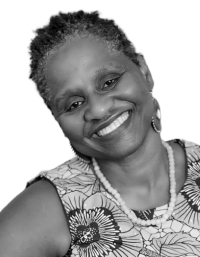
Jacqueline I Samuda, psychotherapist
Seeking safety
Alongside her therapy practice Samuda works as a swimming instructor and teaches a free beginner’s class for immigrant women. She says, ‘I have a trauma background as a psychotherapist, and when someone comes into the water and I see that they’re clinging to the wall and they’re very, very tense, then what I know is that trauma is first registered in the body. We orient to danger until we’re told that it’s safe. So a lot of times I invite them to look around, update their brain and reorient to the present moment. They’re terrified at the beginning, and then sometimes – even at the end of the first class – they find they love the water and don’t want to leave the pool.’
Samuda’s story is that the first time she went to the beach in Jamaica aged 10 she nearly died. ‘But I always wanted to learn to swim,’ she says. ‘I tried several times and never really learned, but I continued until I was able to. In Jamaica we go to the beach and dip our feet in, and that’s as much as we do because we’re terrified. You just hear, “So and so just drowned, and so and so just drowned”, and I wanted to change that. So I started speaking to Black women about their swim stories, and as soon as I mentioned the topic they had a lot to say.
Children of African, Caribbean and Asian heritage in England are 3.5 times more likely to drown4
‘In the 1960s in the US, in some communities you could be killed if you went to try and swim. Some people would rather close the pool and pave it over than allow Black people to get into the water. A lot of Black people were left with the idea of “I don’t know how to swim because I don’t want to get my hair wet”. And they disconnected from the part that white people didn’t want you in the water because they considered you dirty.’
In the UK the barriers for Black people to swim have historically been more subtle, but they remain nonetheless. ‘One of my biggest realisations is that there are still racist tropes in the way people are teaching other people to swim,’ says Nigerian-born Ayo Akinwolere, an award-winning broadcaster and world record swimmer. The biggest one is that Black people find it hard to swim because we have heavy bones, or pigments in our skin that prevent buoyancy. And although a study by University of Portsmouth’s School of Psychology, Sport and Health Sciences has debunked this,6 the belief remains.
Akinwolere had a fear of water and didn’t learn to swim until he was 28 years old. Yet he became the first person to swim across the Palau Trench, which is the deepest stretch of the ocean. He did it as a challenge for the BBC TV show Blue Peter, where he was the first Black male presenter. ‘After Blue Peter I created The Swim Challenge where we took various people from different ethnicities in London – mainly Black Caribbean and African – and taught them to swim in 10 weeks.’
He continues, ‘I learned that people have this arbitrary idea of what different people bring to the water, and it’s based on European supremacy. Many people don’t have the cultural intelligence of how to deal with different cultural groups. In the West African community there’s a stoic-ness [sic] and a lack of willingness to say, “I’m afraid”, or “This is really scary for me”.’ Someone can present as confident and capable and then find it hard to show vulnerability. This mismatch can mean their needs are not met – in the water and beyond.
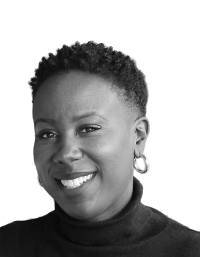
Karen Hartley, psychotherapist
Finding reconnection
For award-winning filmmaker, author, actor and UN gender equality expert Catherine Joy White open water is about freedom. She directed the documentary Swim Sistas, which follows the journeys of four Black British women and girls reclaiming their relationship with water. The film features Olympic swimmer Alice Dearing, who co-founded the Black Swimming Association to promote inclusion and teach practical water safety.
White says, ‘I realised that so many stories about Black people and swimming focus on exclusion or trauma. Those histories matter, but I wanted to tell a different story: a poetic love letter to water, sisterhood and the quiet radicalism of joy. Open water is total freedom for me. It is a place of joy, a place where I return to myself. Water strips everything back. All I can focus on is my breathing. I feel connected to all who have walked before me and those who will exist long after I have gone. There is a liberation in that.’
Up to 95% of Black British adults don’t swim3
And in response to the statistic that up to 95% of Black British adults don’t swim,3 multidisciplinary artist Phoebe Boswell produced a large-scale photographic work for the London Underground called we move through scales of blue. Unveiled in March 2026 it features stunning images of Black swimmers and will be on view at Bethnal Green and Notting Hill Gate for two years.

Dawn Estefan, psychotherapist and writer
In therapy
Imagine that a client comes in with worries and fears about swimming on holiday or going on a mandatory work-organised boat trip. At first glance these fears might seem minor. On deeper probing you may learn of context-specific trauma. But if it’s a Black client there will be complex cultural implications behind what they’re feeling, and it’s up to the therapist to understand this.
‘Everyone’s story is different. My version of safety and my version of danger will be very different due to my lived experiences and my window of the world. The most important thing is to not rush ahead. We need to be culturally sensitive because often there are assumptions made, or misconceptions or confusion,’ says Harvey.
She continues, ‘An Afro-Caribbean lady in her mid-30s recently came to me. She was planning to go on holiday with her new partner and she was worried about being around water because she couldn’t swim. We tracked it back to a childhood memory of her parents being fearful of the water.’ Using Emotional Freedom Technique tapping over the course of a few sessions Harvey acknowledged her fears, explored it in detail and helped her successfully face the water.
‘We needed to make sure that she felt safe and that the nervous system had the capacity to work on this deeply held belief. We also looked at situations where she was fearful of the unknown and what she did to overcome that, and then we placed that into the holiday situation to give her some somatic and self-talk coping strategies.’
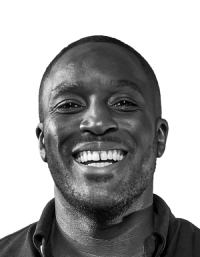
Ayo Akinwolere, broadcaster
Avoiding assumption
Harvey cautions that Black people are not a monolith. Despite our shared histories we are still a unique blend of our personalities, values, identities, experiences, upbringing and whether we’re first-, second-, third- or fourth-generation immigrants. ‘We come in all shapes and sizes, and not all Black people are poor. There is an increasing level of middle-class individuals who are perceived as not being able to afford therapy. Or the person in front of them will be surprised they have been able to pay for it,’ says Harvey.
Returning to the impact of the news, Estefan adds: ‘With some of the stories that come into our news there’s a feeling of a lack of care and a lack of safety, and just the fear of being harmed – I think that’s the louder narrative. So I feel that what happened with the sisters has been blended into this feeling of not being safe.’ She suggests that establishing true safety and trust in the therapy room is key, and that therapists may need to get creative in how they do this.
‘Do your own work and question your beliefs. Be curious and know that when and where I enter is not the whole of the human experience,’ says Samuda. Open and wild swimming is having a resurgence but not everyone equates that with expansion and freedom.
As for me, I’m still unable to swim properly but I hold onto a moment, on holiday in Australia, on an almost deserted beach. The sea was bright azure and I was just floating. It’s the only time I’ve felt completely held by water and at one with nature. It’s a transcendent moment of possibility that I return to again and again. There can be safety in water, in therapy and in life, but it’s only when the entirety of a person’s being can rest.
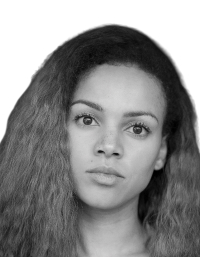
Catherine Joy White, author
References
1. Fuller C. Dad describes sisters’ deaths as ‘unbearable’ as family gather for funeral. BBC 2026; 29 June. bbc.co.uk/news/articles/c6210qd5zeeo
2. National Water Safety Forum 2016. A future without drowning: The UK National Drowning Prevention Strategy 2016-2026. nationalwatersafety.org.uk/media/1005/ uk-drowning-prevention-strategy.pdf
3. Sport England. Sport for all? Why ethnicity and culture matters in sport and physical activity 2020; January. sportenglandproduction- files.s3.eu-west-2.amazonaws.com/ s3fs-public/2020-02/Sportforallreport.pdf
4. National Child Mortality Database. Child drowning deaths – 1 April 2019 to 31 March 2025. ncmd.info/publications/ child-drowning-deaths-2019-2025
5. Wolfe B. Slave ships. Encyclopedia Virginia 2020; 7 December. encyclopediavirginia.org/entries/slave-ships-andthe- middle-passage
6. Black Swimming Association. New study shatters ‘heavy bones’ myth: people of African, Caribbean and Asian heritage can float 2025; 11 December. thebsa.co.uk/news/new-study-shattersheavy- bones-myth-people-of-african-caribbean-andasian- heritage-can-float