
Seven in 10 men (70%)1 say they’d only consider therapy once they reach breaking point, according to our new research.
The survey of 2,500 British men shows two thirds (65%) have struggled with their mental health in the past three years. They’re more likely to address it using their own coping mechanisms such as exercise, hobbies or alcohol, than any other method (25%).
With men accounting for three quarters (74%) of suicides in the UK, according to ONS data2, we’re warning of a “crisis point culture” that’s preventing thousands from seeking professional help when they need it.
Outside View
This is why we’ve launched Outside View, a new campaign encouraging men to consider therapy before they reach breaking point. It aims to meet men where they already feel comfortable opening up, including walking with friends.
Many men say they turn to the outdoors when they're struggling, with 80% saying they go for walks to clear their head and over half (55%) saying walking provides an opportunity to open up to friends.
Campaign aims and content
Our campaign demonstrates how professional support from a trained therapist can help prevent problems escalating to crisis point and how it’s very different to talking to friends and family. It highlights how reaching out for support isn’t something to be ashamed of or a sign of weakness.
The campaign also explains why it’s important to choose a therapist who’s listed on a Professional Standards Authority accredited register – such as BACP’s.
To catch the public’s attention, we recreated a therapist’s office on a well-trodden walking route in Dorset, inviting men to take a moment in the great outdoors and consider how an ‘outside view’ from a therapist could help them.

Rapper and therapy advocate Professor Green appears in a short film, walking with BACP member Rahi Popat and other men who have experienced challenges to their mental wellbeing, sharing honest conversations about the moments that led them to seek support and how therapy changed their lives.
Public education
The campaign is part of our wider public education and awareness work around therapy, our members, and BACP.
So the content reaches and helps as many men as possible, we’ve shared it with journalists and media outlets, through social media and digital advertising, and created a dedicated campaign microsite.
The campaign has already been featured in the Mirror, on national radio including BBC 5 Live, Times Radio and a host of local radio stations.
We’ve also shared resources with community groups including Andy's Man Club, Men's Minds Matter and Shoulder to Shoulder, to encourage people to consider professional support and access therapy earlier.
Campaign data
- One in three (32%) men say they’ve accessed therapy, but seven in 10 (71%) of those wish they’d sought help earlier and 71% also said it’s made them stronger.
- A fear of being seen as weak (37%) and the belief men should deal with problems on their own (34%) are the biggest barriers to men seeking support.
- More than two thirds of men (68%) admit to hiding their mental health struggles from others.
Visit our Outside View website
Our dedicated Outside View website features personal stories of men who’ve had therapy, information about how to access therapy, an interactive experience and links to our Therapist Directory.
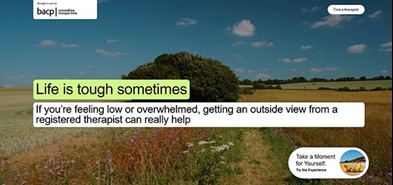
Visit www.outside-view.co.uk
There are lots of different ways to access therapy
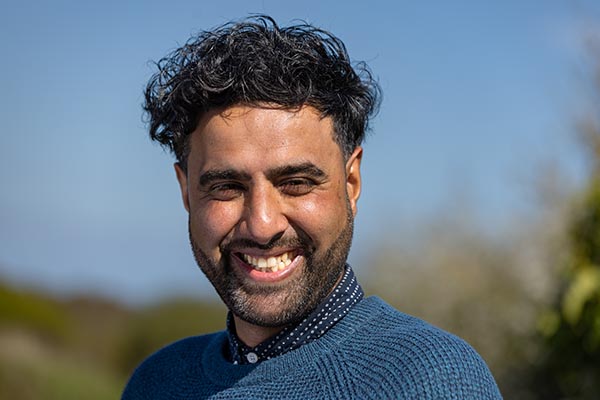
Rahi Popat, a BACP-registered counsellor based in Leicester, who appears in the short film, says:
"Many men often feel ashamed or embarrassed when they’re struggling with their emotions. This data shows there are still lots of societal barriers preventing men from accessing support – whether that’s a fear of being seen as weak, or this belief that men should deal with their problems on their own. But it doesn’t have to be this way.
“Mental health challenges can present themselves in lots of different ways – from unexplained feelings of anxiety or depression, to feeling physically drained or losing interest in things you’d usually enjoy. You might also find yourself disconnecting from those closest to you, losing your sense of belonging and not wanting to engage in relationships. If you don’t feel your usual self and think you might be struggling, know help is available.
“There are lots of different ways to access therapy. What’s important is making sure you get help from a registered therapist, so you know that person is bound by professional standards and ethics. Strength doesn’t come from avoiding struggles, it comes from seeking to overcome them. If you think you might be struggling with your mental health, seek help before you reach crisis point.”
I understand myself better and feel more resilient
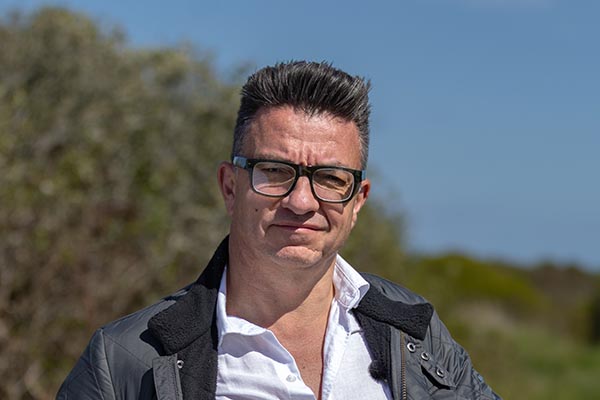
Brent Leyshon (54), an Engineer and Programme Manager, who lives in St. Albans, says:
“I've struggled with anxiety and depression at various stages in my life - from when I was at university to throughout my career. Therapy has always been the tool that has gotten me through these challenges.
“The combination of cognitive behavioural therapy (CBT) and talking therapy has been really helpful for my mental health. I am an engineer, so I like to understand how things work, and what helped was having someone explain the process to me in a clear and practical way. Over time, that changed how my brain responded. Gradually the anxiety and depression begins to lift after a number of focused therapy sessions, and my full recovery will usually follow.
“Every time I have gone through therapy, I have come out understanding myself better, feeling more resilient and seeing more clearly what really matters.”
Therapy helped me find real inner strength
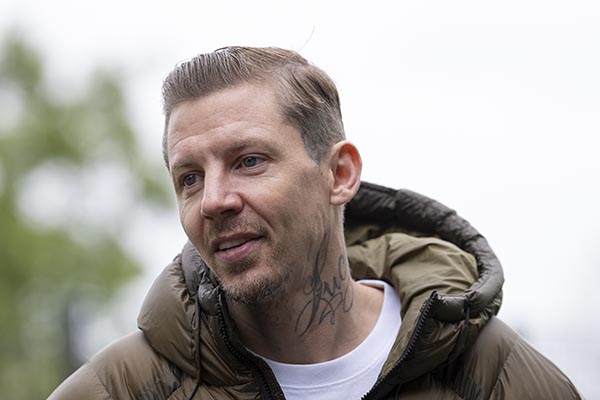
Rapper and therapy advocate Professor Green says:
“A lot of men feel like they need to work out how to fix things on their own. I know I felt like that when I was in the thick of things struggling with hypochondria, anxiety, sleep anxiety, intrusive thoughts and rumination, periodic physical illness seemingly without cause, self-sabotage and self-harm by way of self-medicating. I was at the mercy of it all without any understanding of what was really happening. Carrying everything by myself took its toll.
“Therapy helped me find a real inner strength, I just wish I’d sought it out sooner. Anyone can call themselves a counsellor or psychotherapist, so it is super important to choose someone who is listed on a Professional Standards Authority accredited register such as BACP’s.”
References
1 The research was conducted on behalf of BACP by 3Gem with 2,500 men over the age of 18 who live in the UK between 27 March and 1 April 2026.