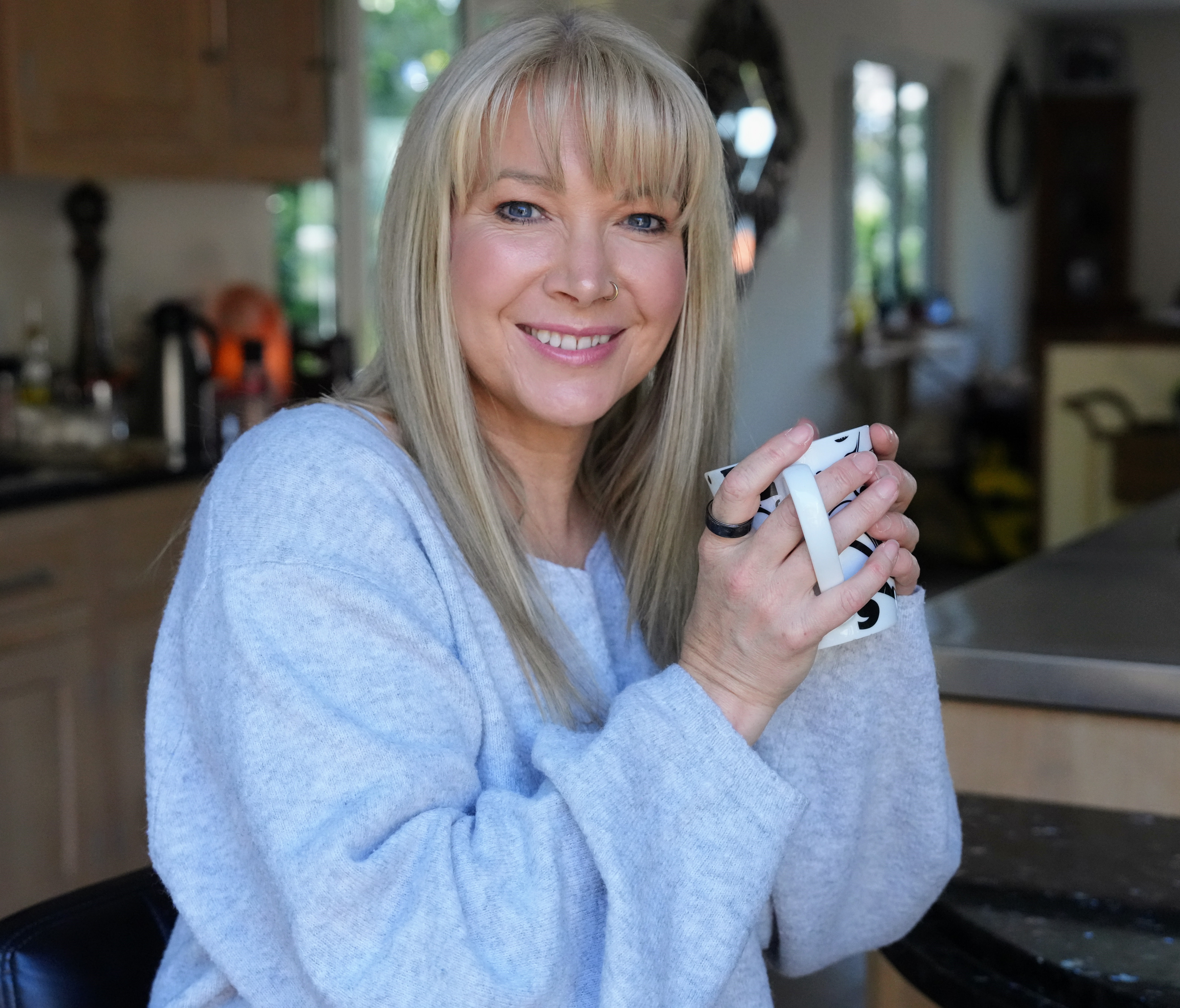
Rebecca Stone
Registered Member MBACP
Contact information
- Phone number
- 07510 495791
Supervisor - Canterbury
Features
Availability
I currently have space for new supervisees.
WHEN I WORK
Tuesday, Wednesday and Thursday every week, plus alternate Mondays.
I don't work Fridays or weekends.
Supervision is available online across the UK, and in person in Canterbury.
FEES
90 minutes: £90
60 minutes: £60
About me and my therapy practice
I'm Becky Stone, a counsellor and clinical supervisor based in Canterbury, working online across the UK.
I qualified as a counsellor in 2012 and I've been supervising since 2018. I hold a Level 6 Certificate in Supervision (ABC Awards and Certa, Quality Licence Scheme, 2018) and I'm a Registered Member of BACP, membership number 66946.
My own specialist area is eating disorders. I hold the Master Practitioner award in Eating Disorders and Obesity from the National Centre for Eating Disorders. If you're holding eating disorder work, or work where food and body have turned out to be part of the picture, I'm a useful supervisor to have, because I've sat with it rather than read about it.
I also work extensively with ADHD and neurodivergence, including the overlap between neurodivergence and difficulties with food, which is missed more often than it's spotted.
I supervise practitioners working with adults and with young people, and I'm used to thinking about safeguarding and risk with under-18s rather than treating it as an occasional problem.
I'm familiar with the parts of private practice nobody trains you for. Contracting. Fees. Endings that don't end. Deciding whether you're the right person for a referral.
I'm also a qualified coach, so if you work across both counselling and coaching, or you're trying to work out where one stops, that's a conversation I can have properly.
My supervision is integrative and relational. I'll ask you what you're avoiding, but not in a way that leaves you regretting having mentioned it.
Practice description
Supervision with me is a working hour, not a performance.
Bring the case you're worried about. Bring the one you think you've handled fine and can't stop thinking about. Bring the client you don't like, the session that went nowhere, the message you're not sure how to answer, the fee you haven't put up.
I'll ask what's happening in the room and what's happening in you, because those are usually connected. I'll be direct about what I think. I won't pretend to be neutral when I'm not, and I won't let something important go past just because it's uncomfortable to name.
I'm used to work that carries risk. Eating disorders, self-harm, young people, safeguarding, deteriorating clients, and the specific weight of holding someone whose body is telling you something they aren't. If that's what you're carrying, it helps to be supervised by someone who doesn't go quiet when you describe it.
I supervise qualified practitioners. I work with counsellors and psychotherapists, as well as practitioners who also coach. Individual supervision only, not groups.
Sessions are 90 or 60 minutes, monthly or fortnightly, online or in person in Canterbury.
My first session
The first session is about getting to know each other properly, and it goes both ways.
I want to know how you work. Your modality, your training, where you're practising, the kind of clients you're seeing. And I want to know you, not just you as a practitioner. What drew you to this work, what you find hard, what you're like when a session has gone badly. Those two things aren't separate, and supervision that only ever looks at the second one misses most of what matters.
You'll get a proper sense of me as well. How I supervise, what I'm like to bring something difficult to, and whether that's what you want. Some people want a supervisor who challenges them. Some want somewhere to think out loud. It's worth knowing which you're getting.
We'd also sort out the practical side: whether monthly or fortnightly fits your practice and meets your professional body's requirements, session length, fees, cancellation, what happens if I'm concerned about something in your work, how we'd handle a disagreement, and what either of us does if it isn't working. I'd rather have that conversation at the start than improvise it later.
Nothing is decided on the day. If I'm not the right supervisor for you, I'd rather say so, and I'll suggest where else to look if I can.
What I can help with
ADD / ADHD, Coach Therapist, Development coaching, Eating disorders, Life coaching
Types of therapy
Behavioural, Integrative, Person centred
Clients I work with
Adults, Children, Older adults, Trainees, Young people
How I deliver therapy
Long term sessions, Online therapy, Short term sessions
Supervisor - Dublin
Features
Availability
I currently have availability for new supervisees.
WHEN I WORK
Tuesday, Wednesday and Thursday every week, plus alternate Mondays.
I don't work Fridays or weekends.
Supervision is online across the UK, and in person in Canterbury.
I supervise qualified practitioners. I'm not taking trainee supervisees at present.
FEES
90 minutes: £90
60 minutes: £60
Monthly or fortnightly, whichever suits your practice, as long as it meets the supervision requirements of your professional body.
About me and my therapy practice
I'm Becky Stone, a counsellor and clinical supervisor based in Canterbury, working online across the UK.
I qualified as a counsellor in 2012 and I've been supervising since 2018. I hold a Level 6 Certificate in Supervision (ABC Awards and Certa, Quality Licence Scheme, 2018) and I'm a Registered Member of BACP, membership number 66946.
I supervise qualified practitioners. I'm not taking trainees at present, so the work tends to be with people who are established and want somewhere serious to think.
My own specialist area is eating disorders. I hold the Master Practitioner award in Eating Disorders and Obesity from the National Centre for Eating Disorders. If you're holding eating disorder work, or work where food and body have turned out to be part of the picture, I'm a useful supervisor to have, because I've sat with it rather than read about it.
I also work extensively with ADHD and neurodivergence, including the overlap between neurodivergence and difficulties with food, which gets missed far more often than it's spotted.
I supervise practitioners working with adults and with young people, and I'm used to thinking about safeguarding and risk with under-18s rather than treating it as an occasional problem.
I'm familiar with the parts of private practice nobody trains you for. Contracting. Fees. Endings that don't end. Deciding whether you're the right person for a referral.
I'm also a qualified coach, so if you work across both counselling and coaching, or you're trying to work out where one stops, that's a conversation I can have properly.
I work with the Seven-Eyed Model (Hawkins and Shohet), which gives us a way of looking at the whole picture rather than only the client, including what's happening between us and what the wider context is doing to the work.
Practice description
Supervision with me is a working hour, not a performance.
Bring the case you're worried about. Bring the one you think you've handled fine and can't stop thinking about. Bring the client you don't like, the session that went nowhere, the message you're not sure how to answer, the fee you haven't put up.
I'll ask what's happening in the room and what's happening in you, because those are usually connected. I'll be direct about what I think. I won't pretend to be neutral when I'm not, and I won't let something important go past just because it's uncomfortable to name.
The Seven-Eyed Model gives that some structure. It means we can move between the client, what you did, what's happening between you and them, what's happening in you, what's happening between us, what's going on in me, and what the wider context is doing to all of it. In practice it stops supervision becoming a run through your caseload, and it's particularly useful when you're stuck and can't work out why.
I'm used to work that carries risk. Eating disorders, self-harm, young people, safeguarding, deteriorating clients, and the specific weight of holding someone whose body is telling you something they aren't. If that's what you're carrying, it helps to be supervised by someone who doesn't go quiet when you describe it.
I work with counsellors and psychotherapists, and with practitioners who also coach. Individual supervision only, not groups.
Sessions are 90 or 60 minutes, monthly or fortnightly, online or in person in Canterbury.
My first session
The first session is a conversation about fit, and it goes both ways.
We'd talk about your training and where you're working, the kind of clients you're seeing, what you want from supervision, and what has and hasn't worked for you before. I'll tell you how I supervise and what I'm like to bring something difficult to, so you can decide whether that suits you.
We'd sort out the practical side properly: whether monthly or fortnightly fits your practice and meets your professional body's requirements, session length, fees, cancellation, what happens if I'm concerned about something in your work, how we'd handle a disagreement, and what either of us does if it isn't working. I'd rather have that conversation at the start than improvise it later.
Nothing is decided on the day. If I'm not the right supervisor for you, I'd rather say so, and I'll suggest where else to look if I can.
What I can help with
Abuse, Anger management, Anxiety, Bereavement, Child related issues, Coach Therapist, Depression, Development coaching, Eating disorders, Life coaching, Loss, Redundancy, Stress, Work related issues
Types of therapy
CBT, Humanistic, Integrative, Person centred, Play therapy, Relational, Solution focused brief therapy, Systemic, Transactional analysis
Clients I work with
Adults, Children, Trainees, Young people
How I deliver therapy
Long term sessions, Online therapy, Outdoor therapy, Short term sessions
Supervisor - london
Features
Availability
I currently have availability for new supervisees.
WHEN I WORK
Tuesday, Wednesday and Thursday every week, plus alternate Mondays.
I don't work Fridays or weekends.
Supervision is online across the UK, and in person in Canterbury.
I supervise qualified practitioners. I'm not taking trainee supervisees at present.
FEES
90 minutes: £90
60 minutes: £60
Monthly or fortnightly, whichever suits your practice, as long as it meets the supervision requirements of your professional body.
About me and my therapy practice
I'm Becky Stone, a counsellor and clinical supervisor based in Canterbury, working online across the UK.
I qualified as a counsellor in 2012 and I've been supervising since 2018. I hold a Level 6 Certificate in Supervision (ABC Awards and Certa, Quality Licence Scheme, 2018) and I'm a Registered Member of BACP, membership number 66946.
I supervise qualified practitioners. I'm not taking trainees at present, so the work tends to be with people who are established and want somewhere serious to think.
My own specialist area is eating disorders. I hold the Master Practitioner award in Eating Disorders and Obesity from the National Centre for Eating Disorders. If you're holding eating disorder work, or work where food and body have turned out to be part of the picture, I'm a useful supervisor to have, because I've sat with it rather than read about it.
I also work extensively with ADHD and neurodivergence, including the overlap between neurodivergence and difficulties with food, which gets missed far more often than it's spotted.
I supervise practitioners working with adults and with young people, and I'm used to thinking about safeguarding and risk with under-18s rather than treating it as an occasional problem.
I'm familiar with the parts of private practice nobody trains you for. Contracting. Fees. Endings that don't end. Deciding whether you're the right person for a referral.
I'm also a qualified coach, so if you work across both counselling and coaching, or you're trying to work out where one stops, that's a conversation I can have properly.
I work with the Seven-Eyed Model (Hawkins and Shohet), which gives us a way of looking at the whole picture rather than only the client, including what's happening between us and what the wider context is doing to the work.
Practice description
Supervision with me is a working hour, not a performance.
Bring the case you're worried about. Bring the one you think you've handled fine and can't stop thinking about. Bring the client you don't like, the session that went nowhere, the message you're not sure how to answer, the fee you haven't put up.
I'll ask what's happening in the room and what's happening in you, because those are usually connected. I'll be direct about what I think. I won't pretend to be neutral when I'm not, and I won't let something important go past just because it's uncomfortable to name.
The Seven-Eyed Model gives that some structure. It means we can move between the client, what you did, what's happening between you and them, what's happening in you, what's happening between us, what's going on in me, and what the wider context is doing to all of it. In practice it stops supervision becoming a run through your caseload, and it's particularly useful when you're stuck and can't work out why.
I'm used to work that carries risk. Eating disorders, self-harm, young people, safeguarding, deteriorating clients, and the specific weight of holding someone whose body is telling you something they aren't. If that's what you're carrying, it helps to be supervised by someone who doesn't go quiet when you describe it.
I work with counsellors and psychotherapists, and with practitioners who also coach. Individual supervision only, not groups.
Sessions are 90 or 60 minutes, monthly or fortnightly, online or in person in Canterbury.
My first session
The first session is a conversation about fit, and it goes both ways.
We'd talk about your training and where you're working, the kind of clients you're seeing, what you want from supervision, and what has and hasn't worked for you before. I'll tell you how I supervise and what I'm like to bring something difficult to, so you can decide whether that suits you.
We'd sort out the practical side properly: whether monthly or fortnightly fits your practice and meets your professional body's requirements, session length, fees, cancellation, what happens if I'm concerned about something in your work, how we'd handle a disagreement, and what either of us does if it isn't working. I'd rather have that conversation at the start than improvise it later.
Nothing is decided on the day. If I'm not the right supervisor for you, I'd rather say so, and I'll suggest where else to look if I can.
What I can help with
ADD / ADHD, Coach Therapist, Development coaching, Eating disorders, Life coaching, Men's issues, Self esteem, Stress, Women's issues, Work related issues
Types of therapy
Cognitive, Gestalt, Humanistic, Integrative, Jungian, Person centred, Transactional analysis
Clients I work with
Adults, Children, Trainees, Young people
How I deliver therapy
Long term sessions, Online therapy, Short term sessions, Telephone therapy
Supervisor - London
Features
Availability
I currently have availability for new supervisees.
WHEN I WORK
Tuesday, Wednesday and Thursday every week, plus alternate Mondays.
I don't work Fridays or weekends.
Supervision is online across the UK, and in person in Canterbury.
I supervise qualified practitioners. I'm not taking trainee supervisees at present.
FEES
90 minutes: £90
60 minutes: £60
Monthly or fortnightly, whichever suits your practice, as long as it meets the supervision requirements of your professional body.
About me and my therapy practice
I'm Becky Stone, a counsellor and clinical supervisor based in Canterbury, working online across the UK.
I qualified as a counsellor in 2012 and I've been supervising since 2018. I hold a Level 6 Certificate in Supervision (ABC Awards and Certa, Quality Licence Scheme, 2018) and I'm a Registered Member of BACP, membership number 66946.
I supervise qualified practitioners. I'm not taking trainees at present, so the work tends to be with people who are established and want somewhere serious to think.
My own specialist area is eating disorders. I hold the Master Practitioner award in Eating Disorders and Obesity from the National Centre for Eating Disorders. If you're holding eating disorder work, or work where food and body have turned out to be part of the picture, I'm a useful supervisor to have, because I've sat with it rather than read about it.
I also work extensively with ADHD and neurodivergence, including the overlap between neurodivergence and difficulties with food, which gets missed far more often than it's spotted.
I supervise practitioners working with adults and with young people, and I'm used to thinking about safeguarding and risk with under-18s rather than treating it as an occasional problem.
I'm familiar with the parts of private practice nobody trains you for. Contracting. Fees. Endings that don't end. Deciding whether you're the right person for a referral.
I'm also a qualified coach, so if you work across both counselling and coaching, or you're trying to work out where one stops, that's a conversation I can have properly.
I work with the Seven-Eyed Model (Hawkins and Shohet), which gives us a way of looking at the whole picture rather than only the client, including what's happening between us and what the wider context is doing to the work.
Practice description
Supervision with me is a working hour, not a performance.
Bring the case you're worried about. Bring the one you think you've handled fine and can't stop thinking about. Bring the client you don't like, the session that went nowhere, the message you're not sure how to answer, the fee you haven't put up.
I'll ask what's happening in the room and what's happening in you, because those are usually connected. I'll be direct about what I think. I won't pretend to be neutral when I'm not, and I won't let something important go past just because it's uncomfortable to name.
The Seven-Eyed Model gives that some structure. It means we can move between the client, what you did, what's happening between you and them, what's happening in you, what's happening between us, what's going on in me, and what the wider context is doing to all of it. In practice it stops supervision becoming a run through your caseload, and it's particularly useful when you're stuck and can't work out why.
I'm used to work that carries risk. Eating disorders, self-harm, young people, safeguarding, deteriorating clients, and the specific weight of holding someone whose body is telling you something they aren't. If that's what you're carrying, it helps to be supervised by someone who doesn't go quiet when you describe it.
I work with counsellors and psychotherapists, and with practitioners who also coach. Individual supervision only, not groups.
Sessions are 90 or 60 minutes, monthly or fortnightly, online or in person in Canterbury.
My first session
The first session is a conversation about fit, and it goes both ways.
We'd talk about your training and where you're working, the kind of clients you're seeing, what you want from supervision, and what has and hasn't worked for you before. I'll tell you how I supervise and what I'm like to bring something difficult to, so you can decide whether that suits you.
We'd sort out the practical side properly: whether monthly or fortnightly fits your practice and meets your professional body's requirements, session length, fees, cancellation, what happens if I'm concerned about something in your work, how we'd handle a disagreement, and what either of us does if it isn't working. I'd rather have that conversation at the start than improvise it later.
Nothing is decided on the day. If I'm not the right supervisor for you, I'd rather say so, and I'll suggest where else to look if I can.
What I can help with
Coach Therapist, Development coaching, Eating disorders, Life coaching
Types of therapy
Integrative, Person centred
Clients I work with
Adults, Children
How I deliver therapy
Long term sessions, Online therapy, Short term sessions
Supervisor - Edinburgh
Features
- Flexible hours available
Availability
I currently have availability for new supervisees.
WHEN I WORK
Tuesday, Wednesday and Thursday every week, plus alternate Mondays.
I don't work Fridays or weekends.
Supervision is online across the UK, and in person in Canterbury.
I supervise qualified practitioners. I'm not taking trainee supervisees at present.
FEES
90 minutes: £90
60 minutes: £60
Monthly or fortnightly, whichever suits your practice, as long as it meets the supervision requirements of your professional body.
About me and my therapy practice
I'm Becky Stone, a counsellor and clinical supervisor based in Canterbury, working online across the UK.
I qualified as a counsellor in 2012 and I've been supervising since 2018. I hold a Level 6 Certificate in Supervision (ABC Awards and Certa, Quality Licence Scheme, 2018) and I'm a Registered Member of BACP, membership number 66946.
I supervise qualified practitioners. I'm not taking trainees at present, so the work tends to be with people who are established and want somewhere serious to think.
My own specialist area is eating disorders. I hold the Master Practitioner award in Eating Disorders and Obesity from the National Centre for Eating Disorders. If you're holding eating disorder work, or work where food and body have turned out to be part of the picture, I'm a useful supervisor to have, because I've sat with it rather than read about it.
I also work extensively with ADHD and neurodivergence, including the overlap between neurodivergence and difficulties with food, which gets missed far more often than it's spotted.
I supervise practitioners working with adults and with young people, and I'm used to thinking about safeguarding and risk with under-18s rather than treating it as an occasional problem.
I'm familiar with the parts of private practice nobody trains you for. Contracting. Fees. Endings that don't end. Deciding whether you're the right person for a referral.
I'm also a qualified coach, so if you work across both counselling and coaching, or you're trying to work out where one stops, that's a conversation I can have properly.
I work with the Seven-Eyed Model (Hawkins and Shohet), which gives us a way of looking at the whole picture rather than only the client, including what's happening between us and what the wider context is doing to the work.
Practice description
Supervision with me is a working hour, not a performance.
Bring the case you're worried about. Bring the one you think you've handled fine and can't stop thinking about. Bring the client you don't like, the session that went nowhere, the message you're not sure how to answer, the fee you haven't put up.
I'll ask what's happening in the room and what's happening in you, because those are usually connected. I'll be direct about what I think. I won't pretend to be neutral when I'm not, and I won't let something important go past just because it's uncomfortable to name.
The Seven-Eyed Model gives that some structure. It means we can move between the client, what you did, what's happening between you and them, what's happening in you, what's happening between us, what's going on in me, and what the wider context is doing to all of it. In practice it stops supervision becoming a run through your caseload, and it's particularly useful when you're stuck and can't work out why.
I'm used to work that carries risk. Eating disorders, self-harm, young people, safeguarding, deteriorating clients, and the specific weight of holding someone whose body is telling you something they aren't. If that's what you're carrying, it helps to be supervised by someone who doesn't go quiet when you describe it.
I work with counsellors and psychotherapists, and with practitioners who also coach. Individual supervision only, not groups.
Sessions are 90 or 60 minutes, monthly or fortnightly, online or in person in Canterbury.
My first session
The first session is a conversation about fit, and it goes both ways.
We'd talk about your training and where you're working, the kind of clients you're seeing, what you want from supervision, and what has and hasn't worked for you before. I'll tell you how I supervise and what I'm like to bring something difficult to, so you can decide whether that suits you.
We'd sort out the practical side properly: whether monthly or fortnightly fits your practice and meets your professional body's requirements, session length, fees, cancellation, what happens if I'm concerned about something in your work, how we'd handle a disagreement, and what either of us does if it isn't working. I'd rather have that conversation at the start than improvise it later.
Nothing is decided on the day. If I'm not the right supervisor for you, I'd rather say so, and I'll suggest where else to look if I can.
What I can help with
Coach Therapist, Development coaching, Life coaching
Types of therapy
Integrative, Person centred
Clients I work with
Adults, Children, Older adults, Trainees, Young people
How I deliver therapy
Long term sessions, Online therapy, Short term sessions
Therapist - Canterbury
Features
Availability
I currently have availability for new clients.
WHEN I WORK
Tuesday, Wednesday and Thursday every week, plus alternate Mondays.
I don't work Fridays or weekends.
Most of my work is online across the UK. I also offer Walk and Talk sessions locally in Canterbury, which are for general counselling rather than eating disorder work.
FEES
Eating disorder assessment, 2 hours: £180
Eating disorder therapy, 50 minutes: £90
Counselling, 50 minutes: £70
Walk and Talk, 50 minutes: £70
ADHD coaching, 50 minutes: £90
Free 20-minute introductory conversation before you decide anything.
The two-hour assessment applies to eating disorder work only. It is not a requirement for general counselling, for Walk and Talk, or for coaching.
About me and my therapy practice
I'm Becky Stone, a counsellor and eating disorder specialist based in Canterbury, working mostly online with people across the UK.
Most of my work is with eating disorders and disordered eating. Anorexia and atypical anorexia, bulimia, binge eating, restrictive eating, emotional eating, and the complicated relationship with food and body that doesn't always have a tidy name attached to it.
I qualified as a counsellor in 2012 and I'm a Registered Member of BACP, membership number 66946. I hold the Master Practitioner award in Eating Disorders and Obesity from the National Centre for Eating Disorders, a fifteen-day specialist training, and I'm a qualified clinical supervisor. I hold an enhanced DBS.
I work with adults and with young people.
Alongside the eating disorder work I see a lot of people who are neurodivergent, or who are starting to wonder whether they might be. ADHD, autism and dyslexia change how food, body image and emotional regulation work, and that connection gets missed a great deal.
My approach is integrative with a person-centred foundation. In practice, that means I fit the work around you rather than fitting you into a method. I sometimes use creative tools, including lifelines, when it helps to see how things connect.
What people tend to say about working with me is that it doesn't feel like being assessed. You don't need the right words, or a diagnosis, or a version of the problem that makes sense yet. You just need to start somewhere.
I won't tell you what you should be eating, and I won't pretend the difficult parts are simple. I'll take it seriously, and I'll be honest with you about what I think is going on.
Practice description
People come to me at very different points.
Some have been managing something for years and have never said it out loud. Some are eating in ways that frighten them and can't work out how it got here. Some are eating what looks like enough and are still not well. Some are convinced they aren't unwell enough to take up a therapist's time, which is one of the most common things I hear and almost never true.
The specifics vary. Rules about food that have quietly multiplied. Bingeing that arrives out of nowhere and is followed by hours of self-loathing. Fear of eating in front of anyone. Checking, weighing, comparing. Days shaped entirely around what has and hasn't been eaten. Or nothing that dramatic, just a relationship with food and your own body that has never been easy and takes up far more room than it should.
Eating difficulties happen in every kind of body. People in larger bodies are among the most likely to be missed, and among the most likely to have been told to lose weight when what was actually going on was an eating disorder.
I understand how tangled shame and food can become, because I've been there myself. I don't bring my own story into your sessions unless it's genuinely useful to you, and I'll always follow your lead.
I also work with young people. That usually starts with a worried parent. Young people get their own space to talk, parents are involved in ways we agree together, and I'm honest with everyone about what I think is happening.
I don't promise recovery, and I'd be wary of anyone who does. What I can tell you is what the work involves, what I've seen help, and when I think something else would serve you better.
Sessions are 50 minutes, mostly online, or walking in Canterbury.
My first session
IF YOU'RE COMING FOR EATING DISORDER WORK
The first appointment is a two-hour assessment, £180. It's longer than a normal session because there's a lot to cover, and I'd rather do it properly than in instalments. We go through what's happening now, your history with food and your body, your physical health, what you've tried before and how that went, and what you want to be different. I often use a lifeline exercise here, because seeing it laid out tends to make connections visible that are hard to describe.
You're in charge of the pace. You don't have to answer everything on the first day.
It's completely normal to feel nervous, or exposed, or both. Most people do, particularly when something has been held quietly for a long time.
At the end of it I'll tell you honestly what I think would help, whether that's working with me or somewhere else. Ongoing sessions after that are 50 minutes at £90.
IF YOU'RE COMING FOR COUNSELLING, WALK AND TALK, OR ADHD COACHING
The assessment doesn't apply. We start with an ordinary 50-minute session. Counselling and Walk and Talk are £70. ADHD coaching is £90.
EITHER WAY, START WITH THE FREE CHAT
There's a free 20-minute conversation first, with nothing to commit to. It's the sensible place to begin, particularly if you're not sure which of these you're looking for. A lot of people aren't, and working that out together is part of my job.
Nothing is required of you afterwards. If you decide I'm not the right fit, that's a perfectly good outcome, and I'd rather you told me.
What I can help with
ADD / ADHD, Coach Therapist, Development coaching, Eating disorders, Life coaching, Menopause, Neurodiversity, Self esteem
Types of therapy
Gestalt, Humanistic, Integrative, Jungian, Person centred, Psychodynamic
Clients I work with
Adults, Children, Young people
How I deliver therapy
Long term sessions, Online therapy, Outdoor therapy, Short term sessions