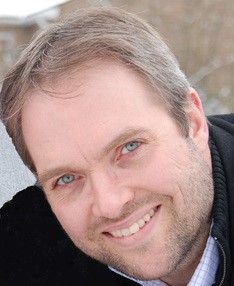
Ian Stockbridge
Registered Member MBACP (Senior Accredited)
Contact information
- Phone number
- 07379538411
Features
- Flexible hours available
Availability
Currently accepting new clients for CBT-led work with anxiety, depression, and perfectionism. Sessions are 50 minutes and run weekly to begin with — most clients start there, with the option of moving to fortnightly as the work progresses.
Working hours: weekday daytime and some early-evening slots, by arrangement. Sessions are primarily online, which makes this work accessible to clients across the UK. Face-to-face sessions may be possible by arrangement — please ask.
I keep an active waiting list when fully booked rather than turning enquiries away, so it is always worth getting in touch. Planned breaks are notified to current clients at least four weeks in advance.
The simplest first step is to book a free 15-minute consultation. No cost, no obligation — just a conversation to see whether this feels like a fit.
About me and my therapy practice
The patterns of thought that keep anxiety in place are usually invisible to the person carrying them. You know what you feel — the racing heart, the broken sleep, the constant low-grade dread — but the specific mechanism producing it is harder to see. That is what cognitive behavioural therapy (CBT) is designed to make visible, and it is the area my training goes deepest.
If anxiety, depression, or perfectionism have been wearing you down for longer than you planned, and you are looking for someone who works specifically in the evidence-based therapies with the strongest track record for these presentations — I may be a good fit.
CBT is structured but not rigid. We build a clear picture of what is happening for you — the thoughts, feelings, and behaviours showing up, when, and what makes them better or worse — and from there look at the patterns keeping things in place. Cognitive distortions, behavioural cycles, the way avoidance shrinks the world, the way perfectionism quietly drives anxiety upward — these become workable once visible.
The work is collaborative. You are not a passive recipient of techniques. Some happens in session; some happens between sessions, where you try a different approach and we look at what happened the following week.
Practice description
My core training in CBT is at degree level (BSc Hons), a deeper foundation than the short-course training many therapists hold. Alongside CBT, I am trained in person-centred counselling, mindfulness-based cognitive therapy (MBCT), and acceptance and commitment therapy (ACT). I also hold specialist certificates in trauma and in CBT for Insomnia (CBTi).
That range allows something specific: when CBT is the right fit, I can offer the full evidence-based protocol. When it is not — when what you need is relational work, or mindfulness, or work on values — I can adapt accordingly. I do not apply one method to every person.
For anxiety, the work tends to focus on catastrophising thought patterns, the body's stress response, and the avoidance keeping anxiety in place. For depression, the work tends to focus on the thought patterns depression produces and on behavioural activation — gradually re-engaging with what has dropped out of your life. For perfectionism, the work focuses on the underlying beliefs driving it and what becomes possible when they loosen.
I am a Senior Accredited Member of the BACP — MBACP (Snr Accred) — aligned to column C of the SCoPEd framework, the highest band of the shared competence framework developed by the UK's major counselling and psychotherapy bodies. I also hold Senior Accredited status with the NCPS (SNCPS Acc.). Holding senior accreditation with both simultaneously is uncommon.
Alongside client work I am a clinical supervisor (PGCert Level 7), the founder of Hope Therapy & Counselling Services, a published author (PMDD Uncovered), and co-host of The Talk Room Podcast.
My first session
Most people who reach out are weighing things up rather than certain. That is what the free 15-minute consultation is for. No cost, no obligation, and not a sales call — it is a conversation. A chance to describe what is going on in your own words, ask any questions you have, and get a sense of whether this feels like a fit.
For CBT specifically, the first paid session is a more thorough assessment. We build a detailed picture of what is happening for you — the specific patterns, the history, what has been tried before, what you are hoping for — and we agree at the start what we are aiming for. CBT has some evidence for structured, time-limited work (typically 8 to 16 sessions for anxiety or depression), but I do not work to a pre-set number. We review together and stop when the work has done what it can.
Types of therapy
Acceptance and commitment therapy (ACT), Behavioural, Brief therapy, CBT, Cognitive, EMDR, Emotionally focused therapy, Family therapy, Humanistic, Person centred, Solution focused brief therapy
Clients I work with
Adults, Couples, EAP, Families, Groups, Older adults, Organisations, Trainees, Young people
How I deliver therapy
Long term sessions, Long-term face-to-face work, Online therapy, Short term sessions, Short-term face-to-face work, Single session therapy (SST), Telephone therapy, Time-limited
Features
- Flexible hours available
Availability
Currently accepting new clients for trauma-informed therapy. Trauma work tends to take longer than work on more contained presenting issues, so I usually take on a limited number of trauma clients at any one time to give each piece of work the space it needs.
Sessions are 50 minutes, typically weekly, though we may adjust pacing based on what your system can tolerate. Sessions are primarily online — which for trauma work has practical advantages, allowing you to be in a space that already feels safe. Face-to-face sessions may be possible by arrangement — please ask.
When fully booked I keep a waiting list rather than turning enquiries away. Planned breaks are notified well in advance so that trauma work is not interrupted unexpectedly.
The first step is a free 15-minute consultation. No cost, no obligation — a chance to ask anything you need to before committing.
About me and my therapy practice
What stays with people after difficult experience is rarely the experience itself — it is the way the body and mind keep returning to it without permission. A smell, a tone of voice, a small sensory detail other people would not notice, and you are somewhere else for a moment. The present moment goes thin. Whatever you were doing, you are now managing something that should be in the past but is not.
If that is part of what brought you to look for a counsellor, what you are describing has a shape and a name. The brain holds traumatic memory differently from ordinary memory — less integrated, more raw, more readily triggered. That is a recognised pattern, and it is workable.
Clients I work with around trauma vary widely. Some come with a single identifiable event — an accident, an assault, a sudden loss, a medical event that overwhelmed the system. Others come with longer patterns — a childhood that did not provide what it should have, a relationship that became something they did not consent to, an experience of being unsafe over years rather than minutes. Sometimes the trauma is recent. Sometimes it is decades old. Both can be worked with.
I also work with people who do not initially come for trauma. They come for anxiety, or depression, or the sense that something is not right, and only later does it become clear that what is underneath is something never properly processed at the time.
Practice description
My approach to trauma rests on two principles. First, the work has to go at the pace your system can tolerate — not faster, not slower. Rushing trauma work risks re-traumatising you; going too slowly risks the work never getting to the parts that need it most. Pacing is part of the skill.
Second, the goal is not to relive what happened. Good trauma therapy is not about forcing you back into the worst moments. It is about helping the system holding the experience begin to process it differently — so it takes its place as something that happened, rather than something still happening.
I hold a specialist certificate in trauma-informed practice, alongside my degree-level training in CBT (BSc Hons), diplomas in person-centred counselling and mindfulness-based cognitive therapy, and training in acceptance and commitment therapy. With trauma clients, the work often draws on trauma-focused CBT, grounding and stabilisation work that strengthens the "window of tolerance", mindfulness and somatic awareness for the bodily dimensions of trauma, and the relational depth longer-term work makes possible.
I am a Senior Accredited Member of the BACP — MBACP (Snr Accred) — aligned to SCoPEd column C, the highest band. SCoPEd Band C specifically indicates competence with complex and high-risk presentations, which matters in trauma work. I also hold senior accreditation with the NCPS (SNCPS Acc.). I am a clinical supervisor (PGCert Level 7), the founder of Hope Therapy, and a published author (PMDD Uncovered).
My first session
Before any trauma work begins, it makes sense to have a conversation — to ask questions, to get a sense of whether this feels like the right fit, to take the first step without committing to anything. That is what the free 15-minute consultation is for. No cost. No obligation.
The first paid session is not about going into traumatic material. It is about understanding the shape of what you are bringing, what your support system looks like, what has been tried before, and what feels manageable. Trauma work has a careful beginning — we agree the pacing, the safety scaffolding, the ground rules for slowing things down if needed. Stabilisation comes before processing, always.
What I can help with
Abuse, ADD / ADHD, Addictions, AIDS/HIV, Anger management, Anxiety, Autism spectrum, Bereavement, Business coaching, Cancer, Career coaching, Child related issues, Chronic fatigue syndrome / ME, Cultural issues, Depression, Development coaching, Disability, Executive coaching, Health related issues, Identity issues, Infertility, Leadership coaching, LGBTQ+ counselling, Life coaching, Loss, Menopause, Men's issues, Neurodiversity, Obsessions, OCD, Personal development, Phobias, Post-traumatic stress, Pregnancy related issues, Redundancy, Relationships, Self esteem, Self-harm, Service veterans, Sex-related issues, Sexual identity, Sexuality, Spirituality, Stress, Trauma, Vegan allied, Women's issues, Work related issues
Types of therapy
Behavioural, Brief therapy, CBT, Cognitive, Eclectic, EMDR, Emotionally focused therapy, Family therapy, Humanistic, Integrative, Neuro linguistic programming, Person centred, Relational, Solution focused brief therapy, Systemic, Transactional analysis
Clients I work with
Adults, Children, Couples, EAP, Families, Groups, Older adults, Organisations, Trainees, Young people
How I deliver therapy
Home visits, Long term sessions, Long-term face-to-face work, Online therapy, Short term sessions, Short-term face-to-face work, Single session therapy (SST), Telephone therapy, Time-limited
Features
- Flexible hours available
- Concessionary rates
Availability
Currently accepting new clients for LGBTQIA+ affirming therapy. Sessions are 50 minutes and run weekly to begin with, with the option of moving to fortnightly as the work progresses.
Working hours include weekday daytime and selected early-evening slots. Sessions are primarily online, which for many LGBTQIA+ clients matters: you can have sessions from a space that already feels safe, without having to travel through a town or workplace where being seen entering a therapist's office might carry implications you would rather avoid. Face-to-face sessions may be possible by arrangement — please ask.
When fully booked I keep an active waiting list rather than turning enquiries away. Planned breaks are notified to current clients at least four weeks in advance.
The simplest first step is a free 15-minute consultation. No cost, no obligation — a conversation to see whether this feels like a fit.
About me and my therapy practice
You are not looking for a therapist who is going to need you to explain yourself. You are not looking for someone who will treat your identity as the interesting feature of the room, or as a complication, or as something they are politely trying to engage with despite not really getting it. You are looking for someone who already understands the basic shape of your life — so that the work can actually be about whatever you have come to do.
That is the place I want this profile to start from. Affirming practice, as I understand it, is not a marketing claim. It is a stance — and one that shapes how I work with the LGBTQIA+ clients who come to me.
It means I work from an understanding that LGBTQIA+ identities and relationships are not pathologies to be managed but valid forms of human life that deserve the same depth of clinical engagement as any other. Your identity is not the problem to be solved — it is the context in which whatever you are bringing to therapy is happening.
What I will not do is make your identity the only thing in the room when it does not need to be. Sometimes a client comes for help with anxiety and being gay is not particularly relevant. Sometimes a client comes for help with their relationship and being trans is central to everything. Sometimes both, in the same piece of work, at different times. You do not have to decide in advance — you can bring what is alive, and the work will go where it needs to go.
Practice description
When the work does need to engage with the specifics of LGBTQIA+ experience, I can do that competently. Coming out at any age — including later in life, which carries its own particular weight. Family or workplace contexts that have not caught up. The cost of minority stress, internalised stigma, or having been pathologised by services that were supposed to help. Relationships outside the templates traditional couples therapy is built around — same-sex partnerships, polyamorous and non-monogamous arrangements, gender-diverse partnerships. The intersection between LGBTQIA+ identity and neurodivergence, which is more common than is often recognised.
I do not practise conversion therapy in any form. I do not offer therapy aiming to change a person's sexual orientation or gender identity. I am committed — in spirit and in practice — to the position set out in the Memorandum of Understanding on Conversion Therapy in the UK. Where a client is genuinely exploring or questioning their identity, the work is non-directive: I will not push you toward any particular answer, including the answer you might think I want you to reach.
My training spans CBT (BSc Hons), person-centred counselling, mindfulness-based cognitive therapy, and ACT, with specialist certificates in trauma and CBTi. With LGBTQIA+ clients, the work draws on whichever combination fits what you need — sometimes structured and focused, sometimes longer and more relational.
I am a Senior Accredited Member of the BACP — MBACP (Snr Accred) — aligned to SCoPEd column C, the highest band. I also hold Senior Accredited status with the NCPS (SNCPS Acc.). I am a clinical supervisor (PGCert Level 7), the founder of Hope Therapy — an organisation with an explicitly LGBTQIA+ inclusive and affirming team — and co-host of The Talk Room Podcast.
My first session
The first step is usually a free 15-minute consultation. No cost, no obligation. You can use it to ask anything you want — about my approach, about how I handle confidentiality, about whether I am likely to be a good fit for what you are bringing.
The first paid session is about understanding what you are bringing and how you want to use the work. There is no requirement to make your identity the topic if it is not what brought you here — and equally, no need to set it aside if it is central. We move at your pace.
If, after the consultation, it is clear that working with an LGBTQIA+-identifying therapist is what you need, the wider Hope Therapy team includes practitioners who themselves identify as part of the community. I can match you to the right colleague rather than insist the work stays with me. The point is that you find the right person, not that you stay with the first person you spoke to.
What I can help with
Abuse, ADD / ADHD, Addictions, AIDS/HIV, Anxiety, Autism spectrum, Bereavement, Business coaching, Cancer, Career coaching, Child related issues, Chronic fatigue syndrome / ME, Cultural issues, Depression, Development coaching, Disability, Executive coaching, Health related issues, Identity issues, Infertility, Leadership coaching, LGBTQ+ counselling, Life coaching, Loss, Menopause, Men's issues, Mood disorder, Neurodiversity, Obsessions, OCD, Personal development, Phobias, Post-traumatic stress, Pregnancy related issues, Relationships, Self esteem, Service veterans, Sex-related issues, Sexual identity, Sexuality, Spirituality, Substance Dependency, Trauma, Vegan allied, Women's issues
Types of therapy
Acceptance and commitment therapy (ACT), Behavioural, Brief therapy, CBT, Cognitive, Eclectic, EMDR, Emotionally focused therapy, Existential, Family therapy, Humanistic, Integrative, Interpersonal, Neuro linguistic programming, Person centred, Psychoanalytic, Psychodynamic, Psychosynthesis, Relational, Solution focused brief therapy, Systemic, Transactional analysis, Transpersonal
Clients I work with
Adults, Children, Couples, EAP, Families, Groups, Older adults, Organisations, Trainees, Young people
How I deliver therapy
Long term sessions, Long-term face-to-face work, Online therapy, Short term sessions, Short-term face-to-face work, Single session therapy (SST), Telephone therapy, Time-limited
Therapist - Rickmansworth
Features
- Flexible hours available
- Concessionary rates
Availability
Currently accepting new clients for work on workplace stress, burnout, and the particular pressures carried by senior professionals. Sessions are 50 minutes, weekly to begin with, with the option to move to fortnightly as the work progresses.
Working hours include weekday daytime and selected early-evening slots — useful for clients fitting therapy around demanding professional roles. Sessions are primarily online, which removes travel time and allows you to have sessions from a space you choose. Face-to-face sessions may be possible by arrangement — please ask.
When fully booked I keep an active waiting list rather than turning enquiries away. Planned breaks are notified to current clients at least four weeks in advance.
The simplest first step is to book a free 15-minute consultation. No cost, no obligation — a conversation to see whether this might be a fit before any decision needs making.
About me and my therapy practice
For 25 years before I retrained as a counsellor, I worked in senior management and directorial roles. At various points I was responsible for more than 200 people. I was effective at it. But what stayed with me longest from those years was not the work itself — it was watching what stress, sustained over time, did to capable, committed people who had nowhere to put it down.
It is one of the reasons workplace stress and burnout sit at the centre of my practice. I understand, from the inside, what it feels like to carry pressure you cannot share with the people you work with. I understand the identity questions it raises. I understand why asking for help feels disproportionately difficult when your professional life depends on being seen as someone who copes.
The people I see most often are not in obvious crisis. They are functioning — sometimes very well, on the outside. But something is wearing thin. Sleep has stopped working properly. Sunday nights carry a low-grade dread. They have stopped enjoying things they used to. Often they have started catastrophising — running scenarios about what might go wrong, who might find out they are struggling.
If any of that lands, it is worth knowing you are describing a pattern I see often. Burnout accumulates. By the time most people decide to do something about it, they have been carrying it for a long time.
Practice description
My core training is in CBT at degree level (BSc Hons) — a structured, evidence-based foundation for working with stress, anxiety, perfectionism, and the thought patterns that keep burnout in place. Alongside CBT, I am trained in person-centred counselling, mindfulness-based cognitive therapy (MBCT), and acceptance and commitment therapy (ACT). I also hold specialist certificates in trauma and in CBT for Insomnia (CBTi).
With workplace stress, the work often draws on CBT for the thought patterns that keep pressure in place, on mindfulness for the relationship with difficult experience, and on ACT for the values question that often sits underneath — what is this work for, and is the cost worth it? Where sleep has collapsed, CBTi is a distinct evidence-based protocol I can introduce as part of the work.
Some clients want structured, time-limited work focused on specific symptoms. Others want a longer, more reflective space in which to look at what their professional life is asking of them. Both are valid. We discuss what you are looking for at the start and review it together as we go.
I am a Senior Accredited Member of the BACP — MBACP (Snr Accred) — aligned to column C of the SCoPEd framework, the highest band of the shared competence framework. I also hold Senior Accredited status with the NCPS (SNCPS Acc.). Holding senior accreditation with both simultaneously is uncommon.
I am a clinical supervisor (PGCert Level 7), the founder of Hope Therapy & Counselling Services, a published author (PMDD Uncovered), and co-host of The Talk Room Podcast.
My first session
The first step is usually a free 15-minute consultation. No cost, no obligation. It is a conversation — a chance to describe what is going on in your own words, ask any questions you have, and get a sense of whether this feels like a fit. For senior professionals weighing up whether to start therapy at all, this often matters more than the first paid session.
The first paid session is a more thorough exploration. We build a clear picture of what is happening for you — what brought you here, what you have been carrying, what has been tried before, what you are hoping for. There is no homework, no questionnaire battery, no jumping straight into technique. The first session is about understanding the shape of what you are bringing.
What I can help with
Abuse, ADD / ADHD, Addictions, AIDS/HIV, Anger management, Anxiety, Autism spectrum, Bereavement, Business coaching, Cancer, Career coaching, Child related issues, Chronic fatigue syndrome / ME, Cultural issues, Depression, Development coaching, Executive coaching, Health related issues, Identity issues, Infertility, Leadership coaching, LGBTQ+ counselling, Life coaching, Loss, Men's issues, Obsessions, OCD, Personal development, Phobias, Post-traumatic stress, Pregnancy related issues, Redundancy, Relationships, Self esteem, Self-harm, Service veterans, Sex-related issues, Sexual identity, Sexuality, Spirituality, Stress, Trauma, Vegan allied, Women's issues, Work related issues
Types of therapy
Behavioural, Brief therapy, CBT, Cognitive, Eclectic, EMDR, Emotionally focused therapy, Family therapy, Humanistic, Integrative, Person centred, Psychodynamic, Psychosynthesis, Relational, Solution focused brief therapy, Systemic, Transactional analysis
Clients I work with
Adults, Children, Couples, EAP, Families, Groups, Older adults, Organisations, Trainees, Young people
How I deliver therapy
Home visits, Long term sessions, Long-term face-to-face work, Online therapy, Short term sessions, Short-term face-to-face work, Single session therapy (SST), Telephone therapy, Time-limited
Features
- Flexible hours available
Availability
Currently accepting new clients for work with PMDD (Premenstrual Dysphoric Disorder) and the wider field of women's mental health. PMDD work tends to be sustained — we are looking at patterns playing out across menstrual cycles — so I take on a limited number of PMDD clients at any one time.
Sessions are 50 minutes, weekly to begin with, with flexibility around the cycle as the work progresses. Sessions are primarily online, which for women managing the cyclical demands of PMDD often makes therapy significantly more accessible. Face-to-face sessions may be possible by arrangement — please ask.
When fully booked I keep an active waiting list. Planned breaks are notified well in advance — PMDD work benefits from continuity, so I am careful about gaps.
The first step is a free 15-minute consultation. No cost, no obligation — a chance to ask anything before deciding.
About me and my therapy practice
You have probably spent years being told that what you experience for one or two weeks a month is just "normal PMS" — manageable with painkillers, a hot water bottle, and a bit of self-care. And yet you know it is not that. You know that for a significant part of every month you become a different person — angrier, more anxious, more hopeless, sometimes barely recognisable to yourself — and that by the time the worst of it passes, you have already damaged relationships, work, and how you feel about yourself. And then it happens again.
If that is what brought you here, what you are describing has a name. Premenstrual Dysphoric Disorder (PMDD) affects an estimated 5 to 8 per cent of women of reproductive age. It is widely underdiagnosed, often dismissed in primary care, and for the women carrying it, it can be genuinely life-altering. It is also one of the specific areas my own practice goes deepest in.
Two years ago I wrote and published PMDD Uncovered: Understanding the Storm Within. I wrote it because the gap in the public conversation was striking — women living with this condition had nowhere accessible to turn for clinically grounded, compassionate information that took their experience seriously.
What I want women arriving at this profile to know first: what you have been experiencing is real, it has a name, and it is workable.
Practice description
PMDD work draws on a particular combination of approaches. CBT — my core qualification at degree level — is well-evidenced for the cognitive and behavioural patterns PMDD tends to produce or amplify: the catastrophising, the relationship rupture, the self-attack during the worst weeks. Mindfulness-based work (I hold a diploma in Mindfulness-Based Cognitive Therapy) helps build a different relationship with the experience as it arrives, so the storm passes through with less damage. ACT brings in the values-led work that becomes essential when PMDD has been shaping life decisions for years.
Practical work is usually part of it: tracking your cycle alongside your symptoms, identifying which parts of the cycle need which strategy, building plans for the high-risk weeks, repairing what gets damaged during them. Therapy with PMDD is not just about how you feel — it is about how you live with the cycle in a way that protects what matters to you.
Although PMDD is the area I have written and published on, my work with women extends more broadly — anxiety and depression around hormonal life stages, the experience of being repeatedly dismissed by healthcare systems, the way perfectionism and people-pleasing get woven through women's mental health in ways rarely named.
I am a Senior Accredited Member of the BACP — MBACP (Snr Accred) — aligned to column C of the SCoPEd framework, the highest band. I also hold Senior Accredited status with the NCPS (SNCPS Acc.). I am a clinical supervisor (PGCert Level 7), the founder of Hope Therapy, and co-host of The Talk Room Podcast.
My first session
The first step is usually a free 15-minute consultation. No cost. No obligation. A chance to ask anything you want before deciding.
The first paid session is about building a clear picture of your particular cycle and experience — how long you have been managing this, what the luteal phase looks like for you specifically, what has been tried (cycle tracking, dietary changes, supplements, medication, previous therapy), what has helped and what has not, and what the cost has been across relationships, work, and your sense of yourself. I may suggest a structured tracking method you can use between sessions if you are not already using one — but only where it is useful, not as a default.
What I do not offer: crisis support, and I do not work with people actively at risk of harming themselves. PMDD can produce intense suicidal ideation during the luteal phase — if that is part of your experience, please make sure you have crisis support in place before beginning therapy. The Samaritans (116 123, free, 24 hours), your GP, or 999 in an emergency.
One honest thing: therapy will not cure PMDD. The condition is biological. What therapy can do is help you understand what is happening, develop strategies that protect what matters most across the cycle, and repair some of what years of being dismissed has done to your sense of yourself. For many women I have worked with, that combination is what makes the cycle livable in a way it had not been before.
Ian Stockbridge — MBACP (Snr Accred) · SNCPS (Acc.) · SCoPEd Band C ·
Types of therapy
Acceptance and commitment therapy (ACT), Behavioural, Brief therapy, CBT, Cognitive, Eclectic, EMDR, Existential, Family therapy, Humanistic, Integrative, Interpersonal, Person centred, Phenomenological, Relational, Solution focused brief therapy, Systemic, Transactional analysis, Transpersonal
Clients I work with
Adults, Couples, EAP, Families, Groups, Older adults, Organisations, Trainees, Young people
How I deliver therapy
Email therapy, Home visits, Long term sessions, Long-term face-to-face work, Online therapy, Short term sessions, Short-term face-to-face work, Single session therapy (SST), Telephone therapy, Time-limited
Features
- Flexible hours available
Availability
Currently accepting new clients for CBT for Insomnia (CBTi). CBTi is more structured than most therapy and typically runs over 6 to 8 sessions, so spaces open up regularly as clients complete the protocol.
Sessions are 50 minutes, weekly through the active phase. CBTi works very well online — the structured nature of the protocol does not require in-person work, and online sessions make the early-week tracking work logistically simpler. Face-to-face sessions may be possible by arrangement — please ask.
When fully booked I keep a waiting list, particularly given the time-limited nature of CBTi — most people on the waiting list are seen within a few weeks. Planned breaks are notified to current clients well in advance, and we try to time them around the protocol where possible.
The first step is a free 15-minute consultation. No cost, no obligation — and useful for checking that CBTi is the right protocol for your particular sleep difficulty.
About me and my therapy practice
You have probably tried most of it. The wind-down routine. The lavender. The phone outside the bedroom. The herbal tablets that were supposed to help. The expensive mattress. Maybe sleeping tablets from your GP that worked for a few weeks and then stopped, or that you stopped because they did not feel like a long-term answer. And here you are, still lying awake at 2:47am, watching the ceiling, knowing tomorrow is going to be hard, knowing how hard tomorrow will be because every day for months has been hard.
If that is roughly where you are, the work I want to introduce you to is called CBT for Insomnia, or CBTi. It is not generalised sleep advice. It is not relaxation training. It is a specific, evidence-based protocol designed by sleep researchers to address the patterns keeping insomnia in place — and it is one of the specific areas my training goes into. I hold a specialist certificate in CBTi alongside my degree-level training in CBT more broadly.
Most sleep advice tells you to do things you already know about — reduce caffeine, wind down before bed, keep the room cool. That advice is fine. It is also rarely what is keeping your insomnia going by the time you have been struggling for months. What is usually keeping insomnia going is more specific: patterns of arousal, thought, and behaviour that develop around sleep when sleep has become a problem.
Practice description
CBTi addresses the maintaining patterns of insomnia directly. It uses sleep restriction (counter-intuitive but evidence-based), stimulus control, cognitive work on the thoughts that maintain insomnia, and structured tracking. It is more demanding than taking a sleeping tablet. It is also significantly more effective long-term, and unlike medication it does not stop working when you stop doing it.
The work typically runs over 6 to 8 sessions with detailed sleep tracking between sessions and specific behavioural prescriptions adjusted based on what is happening. Results usually take 3 to 5 weeks to become apparent. The aim is to do the work, see the change, and finish — CBTi is not designed as ongoing therapy.
CBTi is well-evidenced for chronic insomnia — difficulty falling asleep, staying asleep, or waking too early, sustained over several weeks or longer. It works particularly well when insomnia has become its own thing, even if it originally started because of another stress or life event.
CBTi is less suitable if insomnia is being driven by an untreated medical condition (sleep apnoea, for example, needs specialist medical assessment), by active substance dependence, or by acute trauma that needs to be worked with first. If any of these apply, we can talk about it in the consultation and figure out the right next step.
I am a Senior Accredited Member of the BACP — MBACP (Snr Accred) — aligned to SCoPEd column C. I also hold Senior Accredited status with the NCPS (SNCPS Acc.). I hold a degree in CBT (BSc Hons) and a specialist certificate in CBTi. I am a clinical supervisor (PGCert Level 7) and the founder of Hope Therapy.
My first session
Before starting CBTi, a free 15-minute consultation is the right place to begin. It lets us check that CBTi is the right protocol for your particular sleep difficulty, and lets you ask anything you want about the work. No cost. No obligation.
The first paid session is a thorough sleep assessment — not just how much you sleep but the pattern, the triggers, the surrounding thoughts and behaviours, and what has been tried before. From there we build the protocol around what is actually happening for you. CBTi is structured, but it is not rigid — it adapts to the specifics of your sleep difficulty. You will leave the first session with a clear plan for what the early weeks of work will involve, including the tracking I will ask you to do between sessions.
What I do not offer: crisis support, and I do not work with people actively at risk of harming themselves. If that is where you are right now, please contact the Samaritans (116 123, free, 24 hours), your GP, or 999 in an emergency.
One honest thing: CBTi is more demanding than taking a sleeping tablet, and the first 2 to 3 weeks of the protocol can actually feel harder before sleep starts to consolidate. What it offers in return is the most effective long-term treatment for chronic insomnia that current evidence has identified — results that hold once the work is complete, without ongoing medication. The aim is not for you to keep doing therapy. The aim is for you to sleep.
Ian Stockbridge — MBACP (Snr Accred) · SNCPS (Acc.) · SCoPEd Band C
Types of therapy
Acceptance and commitment therapy (ACT), Behavioural, Brief therapy, CBT, Cognitive, Eclectic, EMDR, Emotionally focused therapy, Existential, Family therapy, Humanistic, Integrative, Interpersonal, Narrative therapy, Person centred, Phenomenological, Relational, Solution focused brief therapy, Systemic, Transactional analysis, Transpersonal
Clients I work with
Adults, Couples, EAP, Families, Groups, Older adults, Organisations, Trainees, Young people
How I deliver therapy
Long term sessions, Long-term face-to-face work, Online therapy, Short term sessions, Short-term face-to-face work, Single session therapy (SST), Telephone therapy, Time-limited