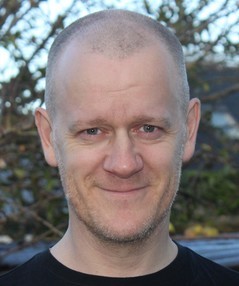
Guy Turton
Registered Member MBACP
Contact information
- Phone number
- 07982841829
Features
- Flexible hours available
Availability
I offer daytime session times 7.30 to 4pm Monday to Thursday. I can also accommodate a need for flexible session times and irregular session times
About me and my therapy practice
Perhaps you think a lot?
Go round in circles? Try to understand everything and keep yourself safe by going to your mind first?
Thinking, analysing and understanding can be incredibly useful. But sometimes you can understand something very well and still find yourself reacting in exactly the same way.
You may know what you want to do but somehow can't quite manage to do it. You may have talked about it, thought about it, read about it — and still feel stuck.
This is where working with the body can offer something different.
Our bodies can respond before our thinking mind has caught up. We already recognise this in everyday language: gut feeling, butterflies in my stomach, a knot in my throat, grin and bear it, or “I just didn't like that person but can't say why.”
Our bodies have wisdom.
Our bodies remember.
Our bodies can tell us things.
Sometimes we need to become quieter and less focused on trying to work everything out, so we can notice sensations, feelings and impulses that might otherwise go unnoticed.
Your mind might be evaluating this.
Your body might benefit from an experience of it.
At this point I'm either going to lose your mind or excite your body.
Sensorimotor Psychotherapy is one way of working with the body and exploring long-held patterns. I have completed Level 2 training in Sensorimotor Psychotherapy, which informs my approach.
This doesn't mean ignoring your mind. It means bringing more of you into the process.
What is on offer?
I offer patience, understanding and a confidential, safe and secure environment. Each person is an individual, so there is no fixed formula.
We can work on a specific issue for a shorter period, or explore wider and longer-standing patterns in more depth. The pace and direction are guided by you.
If something here resonates with you, we can explore what brings you to counselling and whether this way of working feels like a good fit.
Guy
www.counsellinginoxford.comPractice description
Working with Couples
Being in a relationship is one of the most difficult things we do — and it's something most of us have had very little training for.
There can be a huge gap between our expectations (fairy tales, Hollywood and “happily ever after”) and the reality: work, effort, struggle, ups and downs, good times and difficult times.
I work using the Emotionally Focused Model of Couples Counselling (EFCT).
A key part of EFT is understanding “The Cycle” — the habitual pattern or “dance” that you both fall into when you're under pressure and your connection to each other feels threatened.
The Cycle is your joint enemy, not your partner.
One person may pursue, push for answers or try harder to reconnect, while the other may withdraw, shut down or need space. Both can be ways of trying to protect the relationship, even though they can end up making the cycle stronger.
We explore what is happening underneath these patterns — including emotions and vulnerabilities that may not always be obvious, and how earlier relationships and experiences can shape the way we respond to each other now.
This is also a bottom-up approach, paying attention not just to what you think, but to what happens in your body when emotions arise.
Together we might explore:
How you each experience and handle emotions
How you interact and communicate
The patterns you are aware of — and those you may not yet see
Why these patterns make sense, and how they may also be keeping you stuck
How comfortable you are with vulnerability
What happens in your body when you feel threatened, rejected, hurt or disconnected
How your early relationships and the messages you received may influence your relationship today
The aim isn't to decide who is right or wrong.
It's to slow the cycle down, understand what is really happening between you, and create more safety, understanding and connection.
My first session
individuals is at the rate of £80
Rates for couples (starting at £95 depending on session length).
During 50 minutes we can explore your issues and expectations and situation, I can explain how I work, and decide on next steps together if we all agree its appropriate
What I can help with
Abuse, Anger management, Anxiety, Autism spectrum, Bereavement, Cancer, Child related issues, Cultural issues, Depression, Disability, Eating disorders, Health related issues, Infertility, Life coaching, Loss, Obsessions, Personal development, Phobias, Post-traumatic stress, Redundancy, Relationships, Self esteem, Service veterans, Sexuality, Spirituality, Stress, Trauma, Work related issues
Types of therapy
Emotionally focused therapy, Existential, Family therapy, Humanistic, Integrative, Person centred, Relational
Clients I work with
Adults, Children, Couples, EAP, Groups, Older adults, Organisations, Trainees, Young people
How I deliver therapy
Home visits, Long term sessions, Long-term face-to-face work, Online therapy, Short term sessions, Short-term face-to-face work, Telephone therapy, Time-limited
Features
- Flexible hours available
Availability
I offer daytime session times 7.30 to 4pm Monday to Thursday. I can also accommodate a need for flexible session times and irregular session times
About me and my therapy practice
Perhaps you think a lot?
Go round in circles? Try to understand everything and keep yourself safe by going to your mind first?
Thinking, analysing and understanding can be incredibly useful. But sometimes you can understand something very well and still find yourself reacting in exactly the same way.
You may know what you want to do but somehow can't quite manage to do it. You may have talked about it, thought about it, read about it — and still feel stuck.
This is where working with the body can offer something different. (but its hard to explain)
Our bodies can respond before our thinking mind has caught up. We already recognise this in everyday language: gut feeling, butterflies in my stomach, a knot in my throat, grin and bear it, or “I just didn't like that person but can't say why.”
Our bodies have wisdom.
Our bodies remember.
Our bodies can tell us things.
Sometimes we need to become quieter and less focused on trying to work everything out, so we can notice sensations, feelings and impulses that might otherwise go unnoticed.
Your mind might be evaluating this.
Your body might benefit from an experience of it.
At this point I'm either going to lose your mind or excite your body.
Sensorimotor Psychotherapy is one way of working with the body and exploring long-held patterns. I have completed Level 2 training in Sensorimotor Psychotherapy, which informs my approach.
This doesn't mean ignoring your mind. It means bringing more of you into the process.
What is on offer?
I offer patience, understanding and a confidential, safe and secure environment. Each person is an individual, so there is no fixed formula.
We can work on a specific issue for a shorter period, or explore wider and longer-standing patterns in more depth. The pace and direction are guided by you.
If something here resonates with you, we can explore what brings you to counselling and whether this way of working feels like a good fit.
I look forward to hearing from you
Guy
www.counsellinginoxford.com
Practice description
Working with Couples
Being in a relationship is one of the most difficult things we do — and it's something most of us have had very little training for.
There can be a huge gap between our expectations (fairy tales, Hollywood and “happily ever after”) and the reality: work, effort, struggle, ups and downs, good times and difficult times.
I work using the Emotionally Focused Model of Couples Counselling (EFCT).
A key part of EFT is understanding “The Cycle” — the habitual pattern or “dance” that you both fall into when you're under pressure and your connection to each other feels threatened.
The Cycle is your joint enemy, not your partner.
One person may pursue, push for answers or try harder to reconnect, while the other may withdraw, shut down or need space. Both can be ways of trying to protect the relationship, even though they can end up making the cycle stronger.
We explore what is happening underneath these patterns — including emotions and vulnerabilities that may not always be obvious, and how earlier relationships and experiences can shape the way we respond to each other now.
This is also a bottom-up approach, paying attention not just to what you think, but to what happens in your body when emotions arise.
Together we might explore:
How you each experience and handle emotions
How you interact and communicate
The patterns you are aware of — and those you may not yet see
Why these patterns make sense, and how they may also be keeping you stuck
How comfortable you are with vulnerability
What happens in your body when you feel threatened, rejected, hurt or disconnected
How your early relationships and the messages you received may influence your relationship today
The aim isn't to decide who is right or wrong.
It's to slow the cycle down, understand what is really happening between you, and create more safety, understanding and connection.
My first session
During 50 minutes we can explore your issues and expectations and situation, I can explain how I work, and decide on next steps together if we all agree its appropriate
individuals are at the rate of £80
Rates for couples (starting at £95 depending on session length).
Online for all locations
Face to face only in Oxford
Types of therapy
Emotionally focused therapy, Existential, Family therapy, Humanistic, Integrative, Person centred, Relational
Clients I work with
Adults, Couples, Older adults, Trainees, Young people
How I deliver therapy
Long term sessions, Long-term face-to-face work, Online therapy, Short term sessions, Short-term face-to-face work