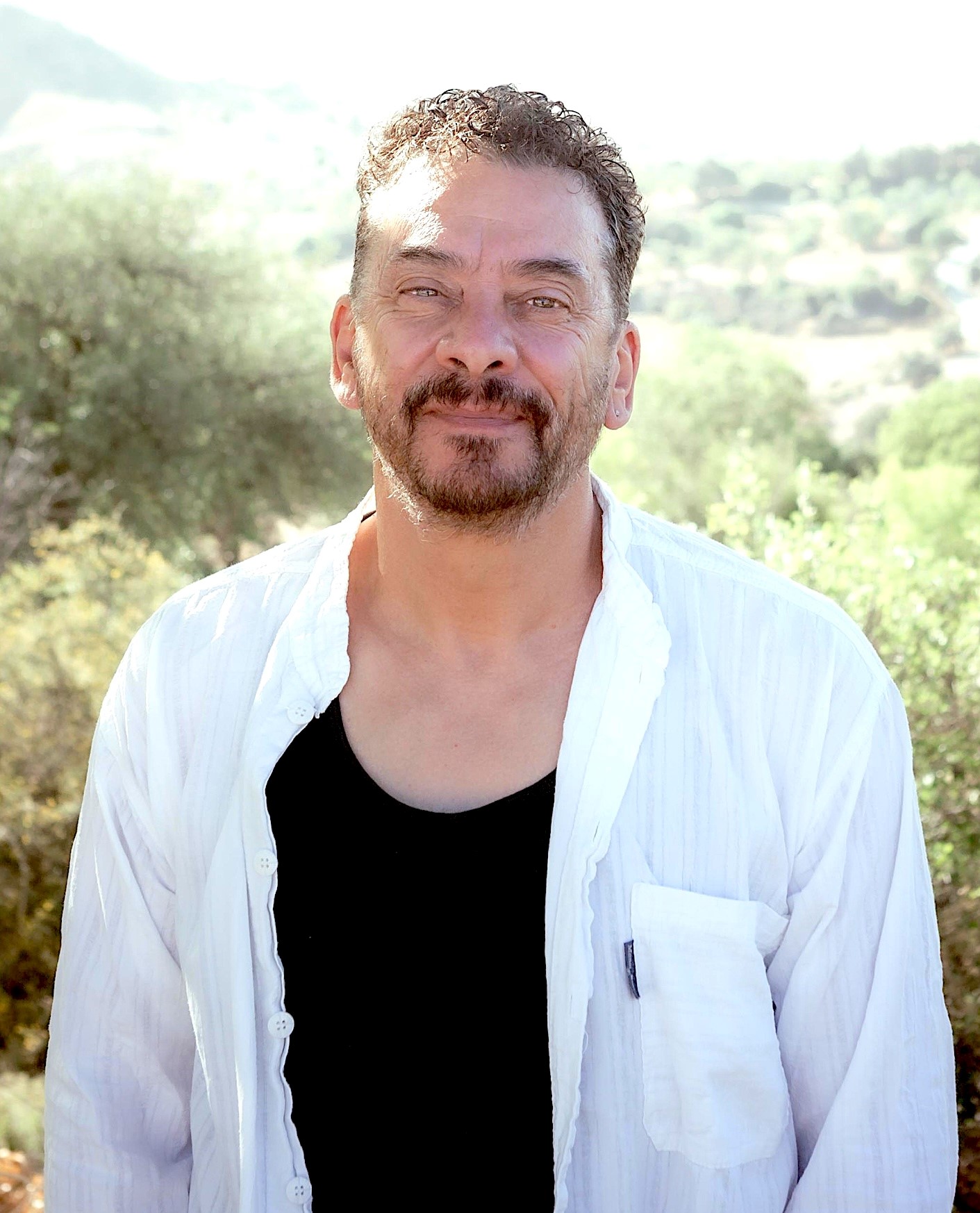
Dimitrios Katsis
Registered Member MBACP
Contact information
- Phone number
- 03300223715
Features
- Flexible hours available
Availability
I currently have a small number of slots available for online therapy.
I offer daytime and some evening appointments, Monday to Friday. Sessions are held via secure video.
About me and my therapy practice
Im really glad your looking around for some help in navigating your life and experiences. I'm "Jimi" Dimitrios Katsis,
Most people who find their way here aren't in crisis. They're functioning — often functioning well — but carrying something that won't shift regardless of how much they've tried to address it.
What most of my clients have in common is that they've tried to fix it. They've read the books, tried the breathing techniques, maybe even had therapy before. Got some relief, learned some tools — but something underneath kept reasserting itself. They're right that it did.
After 30+ years of clinical work — statutory services, court work, and private practice — my view is straightforward: surface-level work gets surface-level results. If the anxiety keeps coming back, there's usually a reason. If the relationship patterns repeat, they developed for a reason. Understanding that reason — not just managing the symptoms — is where real change begins.
I'm an integrative therapist, which means I don't have one method I fit everyone into. I'm trained in Schema Therapy, IFS, EMDR, Somatic Experiencing, DBT-PTSD and psychodynamic approaches. What stays consistent is the direction of the work: finding what's actually driving your experience and changing it, rather than helping you cope with it more efficiently.
I'm also the author of "You Look Fine": And Other Lies Trauma Taught Us "Broken Childhood": A Path to Wholeness, "Tasting Oranges:" On Survival, Absence and Coming Back to Life.
Im also the host of The Echoes — a podcast on the long-term impact of childhood trauma on adult life. All my books are available on Amazon and from any good bookshop. The podcast is on Spotify, Apple Podcasts, Amazon Music and all major platforms. If you want a sense of how I think before we speak, start there.
Practice description
Something's not working — and you probably already know that managing it isn't the same as changing it.
Most people I work with are high-functioning. Professionally capable, often the person others rely on. But privately carrying anxiety that appears for no obvious reason, relationship patterns that repeat despite their best efforts, or a persistent disconnection between how things look and how they actually feel.
They've usually tried to address it. Therapy before, perhaps. Tools, techniques, some relief — but the underlying pattern reasserts itself. That's not a failure of effort. It's what happens when surface-level work meets a deeper problem.
My practice is fully online, which means I work with clients across the UK and internationally — professionals in their 30s, 40s and 50s who need flexible scheduling and a therapist who won't waste their time.
The work is integrative — I draw on Schema Therapy, IFS, EMDR, Somatic Experiencing, DBT-PTSD and psychodynamic approaches depending on what your situation actually needs. What stays consistent is the focus: understanding what's driving your experience, not just helping you manage it more efficiently.
After 30+ years in clinical practice — statutory services, court work, and private practice — I've stopped being interested in indefinite open-ended therapy. I want you to understand what's underneath, develop real capacity to change it, and not need me anymore. That's the measure of good work.
I'm the author of You Look Fine: And Other Lies Trauma Taught Us and Broken Childhood: A Path to Wholeness, and host of The Echoes podcast — all focused on the long-term impact of childhood on adult life. Available on Amazon and all major podcast platforms.
My first session
The first session is where we begin to build the map.
We'll talk about what's brought you here — not just the presenting symptoms, but the broader picture. What's been happening, how long it's been happening, what you've already tried. I'll ask questions that help me understand not just what you're experiencing but why it might make sense given your history.
You won't be expected to disclose everything in one sitting. The first session isn't about unburdening — it's about orientation. Getting a sense of each other, establishing what the work might look like, and beginning to identify what's actually underneath the symptoms you came in with.
By the end of the first session you'll have a clearer sense of how I work, what the therapeutic focus might be, and whether this feels like the right fit. I'll share my initial thinking openly — what I'm noticing, what might be worth exploring, and what approach I think would serve you best.
Practicalities — session frequency, scheduling, fees and confidentiality — are covered here too, so nothing is left unclear before we commit to ongoing work.
Most people leave the first session feeling two things simultaneously: relieved that they came, and slightly surprised by how much ground we covered. That's intentional. Your time matters. I don't believe in slow warm-ups.
What I can help with
Abuse, Anxiety, Depression, Identity issues, Post-traumatic stress, Relationships, Self esteem, Sex-related issues, Stress, Trauma, Women's issues, Work related issues
Types of therapy
Behavioural, CBT, Integrative, Internal Family Systems, Narrative therapy, Psychoanalytic, Psychodynamic, Relational
Clients I work with
Adults, Couples
How I deliver therapy
Email therapy, Long term sessions, Online therapy, Short term sessions, Telephone therapy, Text therapy
Languages spoken
English
Features
- Flexible hours available
Availability
I currently have limited availability for new clients.
My usual working hours are Monday–Thursday 7am to 3pm, with some early evening appointments available. Sessions are by pre-booked appointment only.
If you’d like to enquire, please email with a brief outline of what you’re looking for and your general availability. I aim to respond within 24 hours (excluding weekends and bank holidays).
About me and my therapy practice
Im really glad your looking around for some help in navigating your life and experiences. I'm "Jimi" Dimitrios Katsis,
Most people who find their way here aren't in crisis. They're functioning — often functioning well — but carrying something that won't shift regardless of how much they've tried to address it.
What most of my clients have in common is that they've tried to fix it. They've read the books, tried the breathing techniques, maybe even had therapy before. Got some relief, learned some tools — but something underneath kept reasserting itself. They're right that it did.
After 30+ years of clinical work — statutory services, court work, and private practice — my view is straightforward: surface-level work gets surface-level results. If the anxiety keeps coming back, there's usually a reason. If the relationship patterns repeat, they developed for a reason. Understanding that reason — not just managing the symptoms — is where real change begins.
I'm an integrative therapist, which means I don't have one method I fit everyone into. I'm trained in Schema Therapy, IFS, EMDR, Somatic Experiencing, DBT-PTSD and psychodynamic approaches. What stays consistent is the direction of the work: finding what's actually driving your experience and changing it, rather than helping you cope with it more efficiently.
I'm also the author of "You Look Fine": And Other Lies Trauma Taught Us "Broken Childhood": A Path to Wholeness, "Tasting Oranges:" On Survival, Absence and Coming Back to Life.
Im also the host of The Echoes — a podcast on the long-term impact of childhood trauma on adult life. All my books are available on Amazon and from any good bookshop. The podcast is on Spotify, Apple Podcasts, Amazon Music and all major platforms. If you want a sense of how I think before we speak, start there.
Practice description
Something's not working — and you probably already know that managing it isn't the same as changing it.
Most people I work with are high-functioning. Professionally capable, often the person others rely on. But privately carrying anxiety that appears for no obvious reason, relationship patterns that repeat despite their best efforts, or a persistent disconnection between how things look and how they actually feel.
They've usually tried to address it. Therapy before, perhaps. Tools, techniques, some relief — but the underlying pattern reasserts itself. That's not a failure of effort. It's what happens when surface-level work meets a deeper problem.
My practice is fully online, which means I work with clients across the UK and internationally — professionals in their 30s, 40s and 50s who need flexible scheduling and a therapist who won't waste their time.
The work is integrative — I draw on Schema Therapy, IFS, EMDR, Somatic Experiencing, DBT-PTSD and psychodynamic approaches depending on what your situation actually needs. What stays consistent is the focus: understanding what's driving your experience, not just helping you manage it more efficiently.
After 30 years in clinical practice — statutory services, court work, and private practice — I've stopped being interested in indefinite open-ended therapy. I want you to understand what's underneath, develop real capacity to change it, and not need me anymore. That's the measure of good work.
I'm the author of You Look Fine: And Other Lies Trauma Taught Us and Broken Childhood: A Path to Wholeness, and host of The Echoes podcast — all focused on the long-term impact of childhood on adult life. Available on Amazon and all major podcast platforms.
My first session
The first session is where we begin to build the map.
We'll talk about what's brought you here — not just the presenting symptoms, but the broader picture. What's been happening, how long it's been happening, what you've already tried. I'll ask questions that help me understand not just what you're experiencing but why it might make sense given your history.
You won't be expected to disclose everything in one sitting. The first session isn't about unburdening — it's about orientation. Getting a sense of each other, establishing what the work might look like, and beginning to identify what's actually underneath the symptoms you came in with.
By the end of the first session you'll have a clearer sense of how I work, what the therapeutic focus might be, and whether this feels like the right fit. I'll share my initial thinking openly — what I'm noticing, what might be worth exploring, and what approach I think would serve you best.
Practicalities — session frequency, scheduling, fees and confidentiality — are covered here too, so nothing is left unclear before we commit to ongoing work.
Most people leave the first session feeling two things simultaneously: relieved that they came, and slightly surprised by how much ground we covered. That's intentional. Your time matters. I don't believe in slow warm-ups.
What I can help with
Anxiety, Child related issues, Depression, Loss, Men's issues, Post-traumatic stress, Relationships, Self esteem, Sex-related issues, Sexuality, Stress, Trauma, Women's issues
Types of therapy
Behavioural, CBT, Cognitive, Integrative, Psychoanalytic, Psychodynamic, Relational
Clients I work with
Adults, Couples
How I deliver therapy
Online therapy
Languages spoken
English
Features
- Flexible hours available
Availability
Current availability: Limited for new clients.
Hours: Monday to Thursday 7am to 3pm. Evening appointments available on request.
I reply to enquiries on working days, usually within 12 hours. If you contact me and don’t hear back within that time, please check your spam/junk folder or resend your message.
About me and my therapy practice
Im really glad your looking around for some help in navigating your life and experiences. I'm "Jimi" Dimitrios Katsis,
Most people who find their way here aren't in crisis. They're functioning — often functioning well — but carrying something that won't shift regardless of how much they've tried to address it.
What most of my clients have in common is that they've tried to fix it. They've read the books, tried the breathing techniques, maybe even had therapy before. Got some relief, learned some tools — but something underneath kept reasserting itself. They're right that it did.
After 30+ years of clinical work — statutory services, court work, and private practice — my view is straightforward: surface-level work gets surface-level results. If the anxiety keeps coming back, there's usually a reason. If the relationship patterns repeat, they developed for a reason. Understanding that reason — not just managing the symptoms — is where real change begins.
I'm an integrative therapist, which means I don't have one method I fit everyone into. I'm trained in Schema Therapy, IFS, EMDR, Somatic Experiencing, DBT-PTSD and psychodynamic approaches. What stays consistent is the direction of the work: finding what's actually driving your experience and changing it, rather than helping you cope with it more efficiently.
I'm also the author of "You Look Fine": And Other Lies Trauma Taught Us "Broken Childhood": A Path to Wholeness, "Tasting Oranges:" On Survival, Absence and Coming Back to Life.
Im also the host of The Echoes — a podcast on the long-term impact of childhood trauma on adult life. All my books are available on Amazon and from any good bookshop. The podcast is on Spotify, Apple Podcasts, Amazon Music and all major platforms. If you want a sense of how I think before we speak, start there.
Practice description
Something's not working — and you probably already know that managing it isn't the same as changing it.
Most people I work with are high-functioning. Professionally capable, often the person others rely on. But privately carrying anxiety that appears for no obvious reason, relationship patterns that repeat despite their best efforts, or a persistent disconnection between how things look and how they actually feel.
They've usually tried to address it. Therapy before, perhaps. Tools, techniques, some relief — but the underlying pattern reasserts itself. That's not a failure of effort. It's what happens when surface-level work meets a deeper problem.
My practice is fully online, which means I work with clients across the UK and internationally — professionals in their 30s, 40s and 50s who need flexible scheduling and a therapist who won't waste their time.
The work is integrative — I draw on Schema Therapy, IFS, EMDR, Somatic Experiencing, DBT-PTSD and psychodynamic approaches depending on what your situation actually needs. What stays consistent is the focus: understanding what's driving your experience, not just helping you manage it more efficiently.
After 30+ years in clinical practice — statutory services, court work, and private practice — I've stopped being interested in indefinite open-ended therapy. I want you to understand what's underneath, develop real capacity to change it, and not need me anymore. That's the measure of good work.
I'm the author of You Look Fine: And Other Lies Trauma Taught Us and Broken Childhood: A Path to Wholeness, and host of The Echoes podcast — all focused on the long-term impact of childhood on adult life. Available on Amazon and all major podcast platforms.
My first session
The first session is where we begin to build the map.
We'll talk about what's brought you here — not just the presenting symptoms, but the broader picture. What's been happening, how long it's been happening, what you've already tried. I'll ask questions that help me understand not just what you're experiencing but why it might make sense given your history.
You won't be expected to disclose everything in one sitting. The first session isn't about unburdening — it's about orientation. Getting a sense of each other, establishing what the work might look like, and beginning to identify what's actually underneath the symptoms you came in with.
By the end of the first session you'll have a clearer sense of how I work, what the therapeutic focus might be, and whether this feels like the right fit. I'll share my initial thinking openly — what I'm noticing, what might be worth exploring, and what approach I think would serve you best.
Practicalities — session frequency, scheduling, fees and confidentiality — are covered here too, so nothing is left unclear before we commit to ongoing work.
Most people leave the first session feeling two things simultaneously: relieved that they came, and slightly surprised by how much ground we covered. That's intentional. Your time matters. I don't believe in slow warm-ups.
What I can help with
ADD / ADHD, Anxiety, Depression, Loss, Post-traumatic stress, Relationships, Sex-related issues, Sexual identity, Sexuality, Stress, Trauma, Women's issues, Work related issues
Types of therapy
Behavioural, Cognitive, Integrative, Psychoanalytic, Psychodynamic, Relational
Clients I work with
Adults, Couples, Groups, Organisations
How I deliver therapy
Online therapy
Languages spoken
English
Features
- Flexible hours available
Availability
Thank you for your interest. I’m currently taking on a limited number of new clients, depending on match and session times.
I typically work Monday to Thursday and offer appointments between 7am & 3pm, including some evening slots.
About me and my therapy practice
Im really glad your looking around for some help in navigating your life and experiences. I'm "Jimi" Dimitrios Katsis,
Most people who find their way here aren't in crisis. They're functioning — often functioning well — but carrying something that won't shift regardless of how much they've tried to address it.
What most of my clients have in common is that they've tried to fix it. They've read the books, tried the breathing techniques, maybe even had therapy before. Got some relief, learned some tools — but something underneath kept reasserting itself. They're right that it did.
After 30+ years of clinical work — statutory services, court work, and private practice — my view is straightforward: surface-level work gets surface-level results. If the anxiety keeps coming back, there's usually a reason. If the relationship patterns repeat, they developed for a reason. Understanding that reason — not just managing the symptoms — is where real change begins.
I'm an integrative therapist, which means I don't have one method I fit everyone into. I'm trained in Schema Therapy, IFS, EMDR, Somatic Experiencing, DBT-PTSD and psychodynamic approaches. What stays consistent is the direction of the work: finding what's actually driving your experience and changing it, rather than helping you cope with it more efficiently.
I'm also the author of "You Look Fine": And Other Lies Trauma Taught Us "Broken Childhood": A Path to Wholeness, "Tasting Oranges:" On Survival, Absence and Coming Back to Life.
Im also the host of The Echoes — a podcast on the long-term impact of childhood trauma on adult life. All my books are available on Amazon and from any good bookshop. The podcast is on Spotify, Apple Podcasts, Amazon Music and all major platforms. If you want a sense of how I think before we speak, start there.
Practice description
Something's not working — and you probably already know that managing it isn't the same as changing it.
Most people I work with are high-functioning. Professionally capable, often the person others rely on. But privately carrying anxiety that appears for no obvious reason, relationship patterns that repeat despite their best efforts, or a persistent disconnection between how things look and how they actually feel.
They've usually tried to address it. Therapy before, perhaps. Tools, techniques, some relief — but the underlying pattern reasserts itself. That's not a failure of effort. It's what happens when surface-level work meets a deeper problem.
My practice is fully online, which means I work with clients across the UK and internationally — professionals in their 30s, 40s and 50s who need flexible scheduling and a therapist who won't waste their time.
The work is integrative — I draw on Schema Therapy, IFS, EMDR, Somatic Experiencing, DBT-PTSD and psychodynamic approaches depending on what your situation actually needs. What stays consistent is the focus: understanding what's driving your experience, not just helping you manage it more efficiently.
After 30+ years in clinical practice — statutory services, court work, and private practice — I've stopped being interested in indefinite open-ended therapy. I want you to understand what's underneath, develop real capacity to change it, and not need me anymore. That's the measure of good work.
My first session
The first session is where we begin to build the map.
We'll talk about what's brought you here — not just the presenting symptoms, but the broader picture. What's been happening, how long it's been happening, what you've already tried. I'll ask questions that help me understand not just what you're experiencing but why it might make sense given your history.
You won't be expected to disclose everything in one sitting. The first session isn't about unburdening — it's about orientation. Getting a sense of each other, establishing what the work might look like, and beginning to identify what's actually underneath the symptoms you came in with.
By the end of the first session you'll have a clearer sense of how I work, what the therapeutic focus might be, and whether this feels like the right fit. I'll share my initial thinking openly — what I'm noticing, what might be worth exploring, and what approach I think would serve you best.
Practicalities — session frequency, scheduling, fees and confidentiality — are covered here too, so nothing is left unclear before we commit to ongoing work.
Most people leave the first session feeling two things simultaneously: relieved that they came, and slightly surprised by how much ground we covered. That's intentional. Your time matters. I don't believe in slow warm-ups.
What I can help with
Anxiety, Depression, Loss, Post-traumatic stress, Relationships, Sex-related issues, Stress, Trauma, Women's issues
Types of therapy
Integrative, Internal Family Systems, Person centred, Psychoanalytic, Psychodynamic, Relational, Solution focused brief therapy
Clients I work with
Adults, Couples, Groups, Organisations
How I deliver therapy
Online therapy
Languages spoken
English
Features
- Flexible hours available
Availability
I currently have a small number of slots available for online therapy.
I offer daytime and some evening appointments, Monday to Thursday. Sessions are held via secure video.
First session has no charge and can only be scheduled after an initial email request.
About me and my therapy practice
Im really glad your looking around for some help in navigating your life and experiences. I'm "Jimi" Dimitrios Katsis,
Most people who find their way here aren't in crisis. They're functioning — often functioning well — but carrying something that won't shift regardless of how much they've tried to address it.
What most of my clients have in common is that they've tried to fix it. They've read the books, tried the breathing techniques, maybe even had therapy before. Got some relief, learned some tools — but something underneath kept reasserting itself. They're right that it did.
After 30+ years of clinical work — statutory services, court work, and private practice — my view is straightforward: surface-level work gets surface-level results. If the anxiety keeps coming back, there's usually a reason. If the relationship patterns repeat, they developed for a reason. Understanding that reason — not just managing the symptoms — is where real change begins.
I'm an integrative therapist, which means I don't have one method I fit everyone into. I'm trained in Schema Therapy, IFS, EMDR, Somatic Experiencing, DBT-PTSD and psychodynamic approaches. What stays consistent is the direction of the work: finding what's actually driving your experience and changing it, rather than helping you cope with it more efficiently.
I'm also the author of "You Look Fine": And Other Lies Trauma Taught Us "Broken Childhood": A Path to Wholeness, "Tasting Oranges:" On Survival, Absence and Coming Back to Life.
Im also the host of The Echoes — a podcast on the long-term impact of childhood trauma on adult life. All my books are available on Amazon and from any good bookshop. The podcast is on Spotify, Apple Podcasts, Amazon Music and all major platforms. If you want a sense of how I think before we speak, start there.
Practice description
Something's not working — and you probably already know that managing it isn't the same as changing it.
Most people I work with are high-functioning. Professionally capable, often the person others rely on. But privately carrying anxiety that appears for no obvious reason, relationship patterns that repeat despite their best efforts, or a persistent disconnection between how things look and how they actually feel.
They've usually tried to address it. Therapy before, perhaps. Tools, techniques, some relief — but the underlying pattern reasserts itself. That's not a failure of effort. It's what happens when surface-level work meets a deeper problem.
My practice is fully online, which means I work with clients across the UK and internationally — professionals in their 30s, 40s and 50s who need flexible scheduling and a therapist who won't waste their time.
The work is integrative — I draw on Schema Therapy, IFS, EMDR, Somatic Experiencing, DBT-PTSD and psychodynamic approaches depending on what your situation actually needs. What stays consistent is the focus: understanding what's driving your experience, not just helping you manage it more efficiently.
After 30+ years in clinical practice — statutory services, court work, and private practice — I've stopped being interested in indefinite open-ended therapy. I want you to understand what's underneath, develop real capacity to change it, and not need me anymore. That's the measure of good work.
I'm the author of You Look Fine: And Other Lies Trauma Taught Us and Broken Childhood: A Path to Wholeness, and host of The Echoes podcast — all focused on the long-term impact of childhood on adult life. Available on Amazon and all major podcast platforms.
My first session
The first session is where we begin to build the map.
We'll talk about what's brought you here — not just the presenting symptoms, but the broader picture. What's been happening, how long it's been happening, what you've already tried. I'll ask questions that help me understand not just what you're experiencing but why it might make sense given your history.
You won't be expected to disclose everything in one sitting. The first session isn't about unburdening — it's about orientation. Getting a sense of each other, establishing what the work might look like, and beginning to identify what's actually underneath the symptoms you came in with.
By the end of the first session you'll have a clearer sense of how I work, what the therapeutic focus might be, and whether this feels like the right fit. I'll share my initial thinking openly — what I'm noticing, what might be worth exploring, and what approach I think would serve you best.
Practicalities — session frequency, scheduling, fees and confidentiality — are covered here too, so nothing is left unclear before we commit to ongoing work.
Most people leave the first session feeling two things simultaneously: relieved that they came, and slightly surprised by how much ground we covered. That's intentional. Your time matters. I don't believe in slow warm-ups.
What I can help with
Anxiety, Child related issues, Coercive control, Depression, Loss, Post-traumatic stress, Relationships, Sex-related issues, Stress, Trauma, Work related issues
Types of therapy
Behavioural, CBT, Cognitive analytic therapy, Integrative, Internal Family Systems, Psychoanalytic, Psychodynamic, Relational
Clients I work with
Adults, Couples, Groups
How I deliver therapy
Online therapy
Languages spoken
English