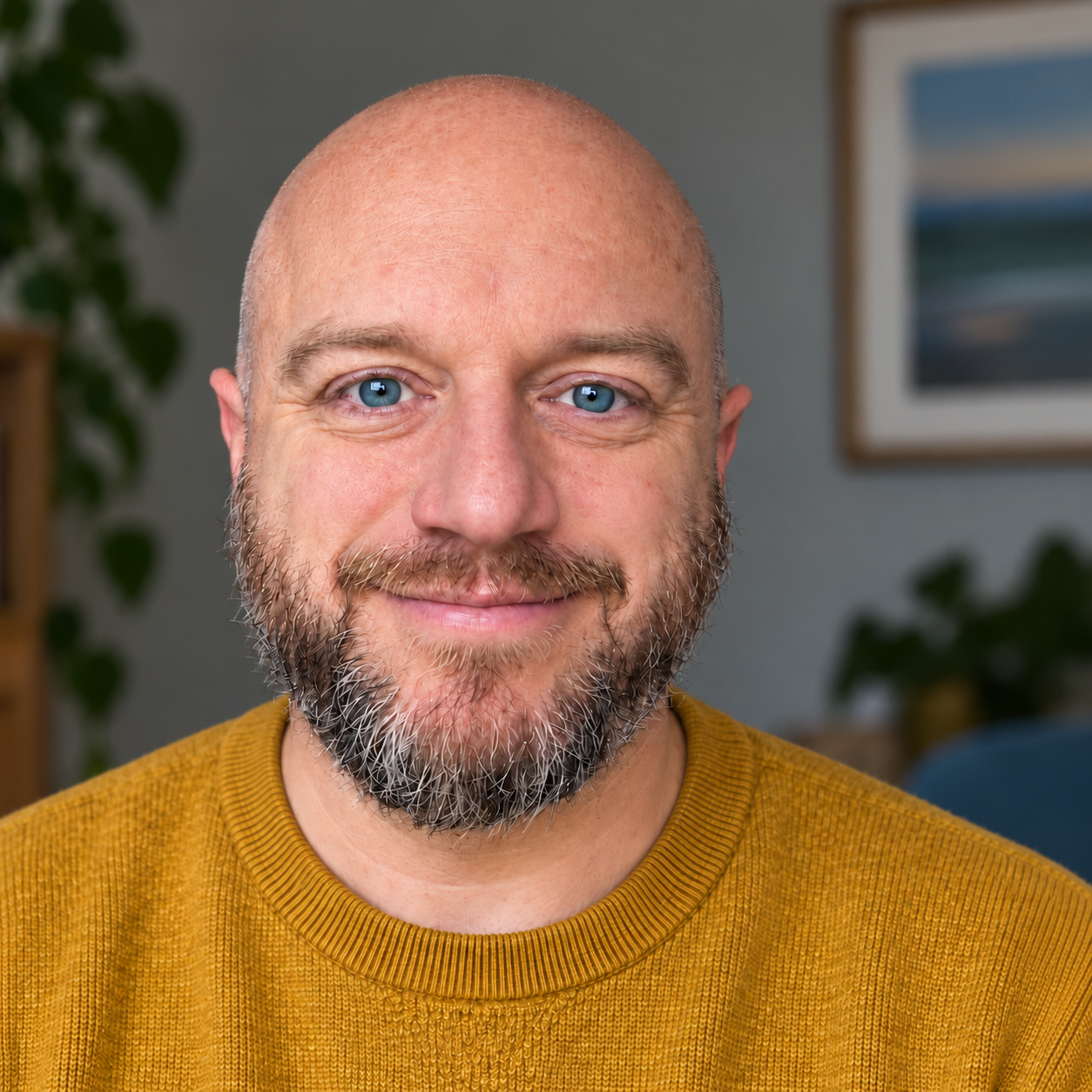
Benjamin Scott
Registered Member MBACP
Contact information
- Phone number
- 07957 314 350
Features
- Flexible hours available
- Available for home visits
- Concessionary rates
About me and my therapy practice
Grief & Bereavement Specialist • Person-Centred Therapist - Level 5 Diploma • Marie Curie Bereavement Support volunteer • End of Life Doula • Nearly a decade working around end of life and bereavement.
One of the hardest parts of grief can be watching life carry on around you when your own life feels like it will never be the same. I know that feeling.
You may find yourself holding things back, protecting the people around you from how you really feel, or wondering whether you have talked about the person who died too much.
Counselling can be somewhere you don't have to hold back.
I was trained by Marie Curie and have volunteered with their Bereavement Support Line for the past six years, supporting people through many different experiences of grief and loss. I have trained with Cruse Bereavement Care and completed ASIST suicide intervention training. I am also trained as an End of Life Doula with Living Well Dying Well.
My approach is person-centred, which means I will not analyse your grief, tell you what it should mean, or decide where you ought to be by now. There is no timetable you need to follow and no expectation that you should simply “move on”.
Instead, I offer a calm, compassionate space where you can speak honestly about what has happened, about the person who died, and about what life feels like now.
For me, counselling is not about trying to remove grief. It is about making room for everything that comes with it, while gradually finding your own way of living alongside the loss.
Practice description
My practice is focused on grief, bereavement and loss. While grief is often associated with death, it can also follow other significant changes — the end of a relationship, loss of health, redundancy, retirement, changes in identity, or the loss of the life you expected to have.
Whatever the source of the loss, it can leave you feeling disorientated, overwhelmed or unsure of who you are now.
Our sessions together will be led by what feels most important to you. There is no set agenda and no expectation that you should be feeling differently by a particular point.
In my experience, some people come to counselling feeling overwhelmed by grief. Others feel numb, angry, guilty, relieved, lost or simply unlike themselves. Sometimes it's difficult to know exactly what you need to talk about until you have somewhere you can begin.
I work in a Person-Centred way, which is therapy jargon for - putting you, rather than a diagnosis, theory or set of techniques, at the centre of the counselling. I will not tell you what you should be feeling or try to push you towards a particular outcome.
That does not mean I simply sit back and listen. If it feels helpful, I can also offer guidance, ideas and psychoeducation around grief. We might explore what is happening in the brain and body when we experience loss, look at different ways grief has been understood, or even consider what writers and philosophers have said about loss across centuries.
Some people want this kind of context because it helps them make sense of what they are experiencing; others simply want space to talk. We can use as much or as little of it as feels useful to you.
There is no fixed number of sessions. Some people find a shorter period of counselling helpful, while others value having support for longer. We can regularly review how the work is feeling and decide together what is right for you.
My first session
Before booking a first counselling session, I offer a free 20-minute introductory call. This gives you an opportunity to tell me a little about what has brought you to counselling, ask any questions, and get a sense of whether I might be the right person for you.
There is no pressure to make a decision during the call or to book further sessions afterwards.
If you decide to continue, our first full session is much like any other session. I do not use a formal assessment or ask you to arrive with a clear explanation of what you want to work on.
We may spend some time talking about what has brought you to counselling, what life feels like at the moment, and what you hope might be helpful.
I will not analyse you, tell you what you should be feeling, or try to move you towards a version of “acceptance”. Instead, we can make space for whatever is there and begin to understand, together, what this loss means for you and the life you are living now.
You do not need to tell me everything in the first session. We can go at a pace that feels manageable for you.
I will also explain a few practical things, including confidentiality, how sessions work and what you can expect from me.
At the end of the session, there is no expectation that you commit to a set number of appointments. If you would like to continue, we can agree what frequency feels right and review this as we go.
What I can help with
Baby loss, Bereavement, Depression, Loss, Relationships, Trauma
Types of therapy
Humanistic, Person centred, Phenomenological
Clients I work with
Adults, EAP, Older adults, Trainees
How I deliver therapy
Home visits, Long term sessions, Long-term face-to-face work, Online therapy, Outdoor therapy, Short term sessions, Short-term face-to-face work, Telephone therapy
Languages spoken
English
Features
- Flexible hours available
- Available for home visits
About me and my therapy practice
Grief & Bereavement Counsellor • End of Life Doula
One of the hardest parts of grief can be watching life carry on around you when your own life feels like it will never be the same. I know that feeling.
You may find yourself holding things back, protecting the people around you from how you really feel, or wondering whether you have talked about the person who died too much.
Counselling can be somewhere you don't have to hold back.
I am a professionally qualified Person-Centred Counsellor and registered member of the BACP, focusing my practice on grief, bereavement and loss.
I was trained by Marie Curie and have volunteered with their Bereavement Support Line for the past six years, supporting people through many different experiences of grief and loss. I am also trained as an End of Life Doula with Living Well Dying Well, and have spent nearly a decade working around death, dying and bereavement.
My approach is person-centred, which means I will not analyse your grief, tell you what it should mean, or decide where you ought to be by now. There is no timetable you need to follow and no expectation that you should simply “move on”.
Instead, I offer a calm, compassionate space where you can speak honestly about what has happened, about the person who died, and about what life feels like now.
For me, counselling is not about trying to remove grief. It is about making room for everything that comes with it, while gradually finding your own way of living alongside the loss.
Practice description
My practice is focused on grief, bereavement and loss. While grief is often associated with death, it can also follow other significant changes — the end of a relationship, loss of health, redundancy, retirement, changes in identity, or the loss of the life you expected to have.
Whatever the source of the loss, it can leave you feeling disorientated, overwhelmed or unsure of who you are now.
Our sessions together will be led by what feels most important to you. There is no set agenda and no expectation that you should be feeling differently by a particular point.
In my experience, some people come to counselling feeling overwhelmed by grief. Others feel numb, angry, guilty, relieved, lost or simply unlike themselves. Sometimes it's difficult to know exactly what you need to talk about until you have somewhere you can begin.
I work in a Person-Centred way, which is therapy jargon for - putting you, rather than a diagnosis, theory or set of techniques, at the centre of the counselling. I will not tell you what you should be feeling or try to push you towards a particular outcome.
That does not mean I simply sit back and listen. If it feels helpful, I can also offer guidance, ideas and psychoeducation around grief. We might explore what is happening in the brain and body when we experience loss, look at different ways grief has been understood, or even consider what writers and philosophers have said about loss across centuries.
Some people want this kind of context because it helps them make sense of what they are experiencing; others simply want space to talk. We can use as much or as little of it as feels useful to you.
There is no fixed number of sessions. Some people find a shorter period of counselling helpful, while others value having support for longer. We can regularly review how the work is feeling and decide together what is right for you.
My first session
Before booking a first counselling session, I offer a free 20-minute introductory call. This gives you an opportunity to tell me a little about what has brought you to counselling, ask any questions, and get a sense of whether I might be the right person for you.
There is no pressure to make a decision during the call or to book further sessions afterwards.
If you decide to continue, our first full session is much like any other session. I do not use a formal assessment or ask you to arrive with a clear explanation of what you want to work on.
We may spend some time talking about what has brought you to counselling, what life feels like at the moment, and what you hope might be helpful.
I will not analyse you, tell you what you should be feeling, or try to move you towards a version of “acceptance”. Instead, we can make space for whatever is there and begin to understand, together, what this loss means for you and the life you are living now.
You do not need to tell me everything in the first session. We can go at a pace that feels manageable for you.
I will also explain a few practical things, including confidentiality, how sessions work and what you can expect from me.
At the end of the session, there is no expectation that you commit to a set number of appointments. If you would like to continue, we can agree what frequency feels right and review this as we go.
What I can help with
Baby loss, Bereavement, Depression, Loss, Neurodiversity, Pet bereavement
Types of therapy
Humanistic, Person centred, Phenomenological
Clients I work with
Adults, EAP, Older adults
How I deliver therapy
Home visits, Long term sessions, Long-term face-to-face work, Online therapy, Outdoor therapy, Short term sessions, Short-term face-to-face work, Telephone therapy
Languages spoken
English