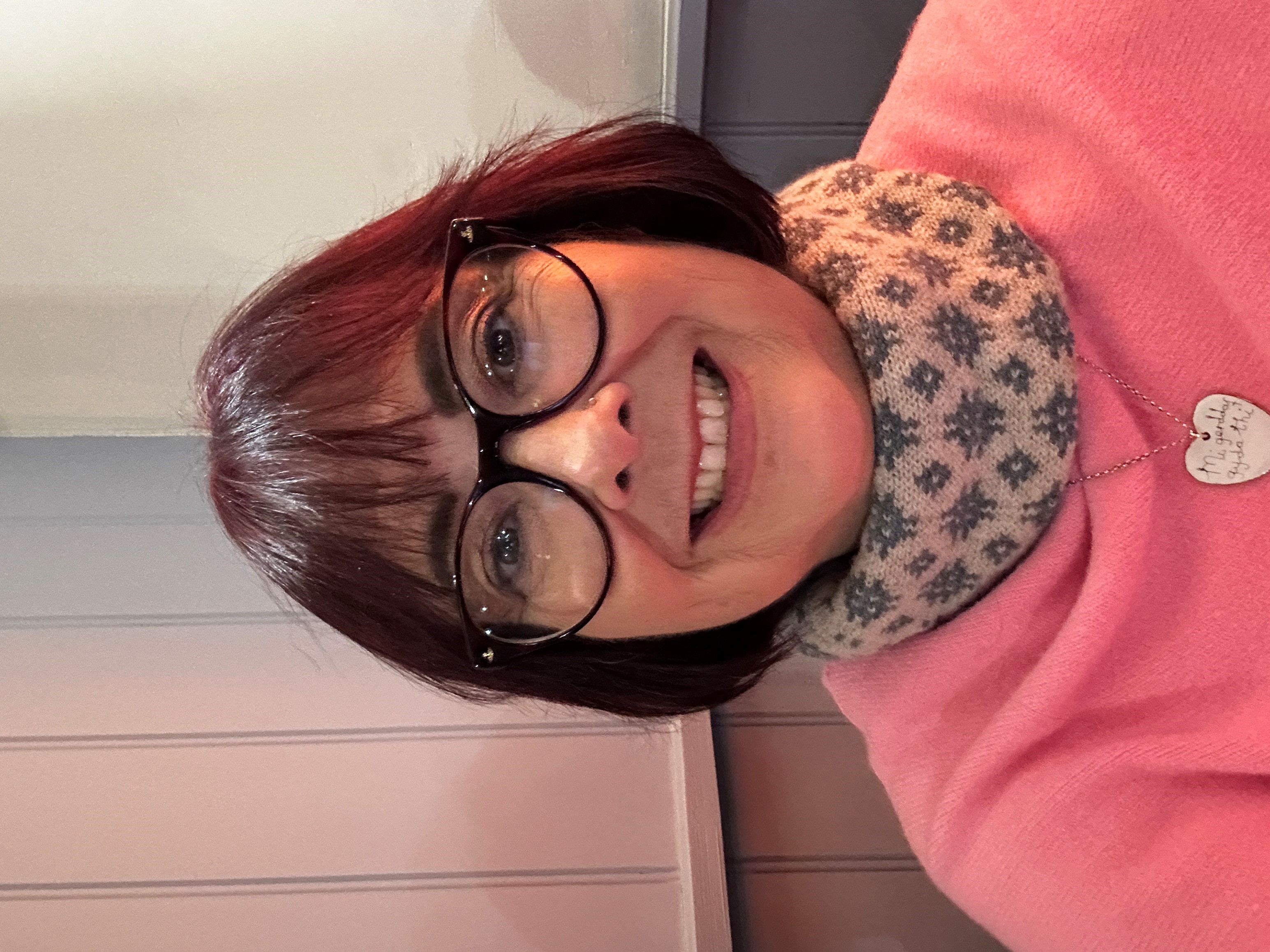
Anwen Edwards
Registered Member MBACP
Contact information
Therapist - Llanfairpwllgwyngyll
Features
- Flexible hours available
About me and my therapy practice
People come to counselling for many different reasons. Sometimes there's a particular problem they want to talk through. At other times, life may feel difficult or confusing, without there being one clear reason why. You might be going through a change, struggling to cope or simply feel that something isn't quite right. You don't need to have all the answers before you start.
I'm Anwen, a qualified counsellor and registered member of the British Association for Counselling and Psychotherapy (MBACP). I offer counselling in both Welsh and English.
I understand that talking about personal things can be difficult, especially with someone you haven't met before. Whether you've had counselling in the past or are thinking about it for the first time, I want you to feel comfortable enough to talk in your own way, without worrying about being judged.
Alongside my counselling work, I teach music and lecture in music education at university. I've worked in education for 30 years, including as a head of year, where supporting pupils' wellbeing was an important part of my role. I also volunteer as a counsellor in NHS Occupational Health, working with people who are experiencing difficulties in their working lives.
Music has always been a big part of my life. My background as a musician has shaped the way I listen and the importance I place on really hearing what someone is saying, as well as what may be harder for them to put into words. I bring that same curiosity and attentiveness to my counselling work.
There's a Welsh phrase that's particularly meaningful to me: Mi gerddaf gyda thi – “I will walk with you.” It reflects how I see counselling. I'm not there to tell you what to do or how to live your life, but to walk alongside you as we explore what's happening and what it means to you. I'll listen, try to understand things from your point of view and help you make sense of your experiences, without making assumptions about you.
Practice description
You might be struggling with anxiety, low mood, stress at work or difficulties in your relationships. Perhaps you're dealing with loss, illness or a change in your life. You may spend a lot of time looking after other people and find that your own feelings have taken a back seat. Or you might not know exactly what's wrong, only that things don't feel as they should.
I work with adults who want to talk things through, understand themselves a little better or find a way forward when life feels difficult. You don't have to be at breaking point to come to counselling, and you don't need to know exactly what you want from it.
My approach is person-centred and humanistic. In simple terms, this means starting with you: your experiences, your feelings and what's important to you. Everyone's different, so I won't assume that what works for one person will work for another. While this approach is at the heart of my work, I'll also draw on other therapeutic ideas and techniques when I feel they might be helpful.
Our sessions are a chance to talk openly and explore things together. I'll listen, ask questions and sometimes offer a different perspective. We might look at patterns in your thoughts, feelings or relationships, or begin to understand things that have been difficult to make sense of. If something I've said doesn't feel right, you can tell me. It's important that you feel able to be yourself in our conversations.
You don't have to arrive knowing what to say or where to begin. We can start with whatever feels most important to you and take things one step at a time.
My first session
Making that first contact with a counsellor can feel daunting. You might be unsure what to say, whether counselling is right for you or even whether what you're going through is enough to ask for help with.
I offer a free 10-minute introductory chat by phone or online. It's a chance for us to meet, have a brief conversation and see how we feel about working together. You can ask any initial questions, and there's no obligation to book a session afterwards.
If we decide to go ahead, our first session gives us more time to talk about what's brought you to counselling and what you'd like help with. I'll explain how I work, including confidentiality and its limits, and there'll be time for any questions you may have.
There's no need to tell me everything straight away or to have worked out what you want to say beforehand. We can begin wherever feels right for you, and there's no rush to cover everything in one session.
It's also an opportunity for you to get to know me and decide whether you feel comfortable talking with me. Finding the right counsellor is important, so it's perfectly okay to take your time and think about whether it feels like a good fit.
I hope that, through our work together, you'll have a space where you feel able to talk openly, make sense of what's happening in your life and begin to find your own way forward.
What I can help with
Abuse, ADD / ADHD, Addictions, AIDS/HIV, Anger management, Anxiety, Bereavement, Body/somatic therapy, Cancer, Child related issues, Chronic fatigue syndrome / ME, Cultural issues, Depression, Disability, Eating disorders, Health related issues, Identity issues, Infertility, LGBTQ+ counselling, Menopause, Men's issues, Narcissism, Neurodiversity, Pregnancy related issues, Redundancy, Relationships, Self esteem, Self-harm, Sex-related issues, Sexual identity, Sexuality, Spirituality, Stress, Trauma, Women's issues, Work related issues
Types of therapy
Humanistic, Integrative, Person centred
Clients I work with
Adults, Older adults, Trainees
How I deliver therapy
Long term sessions, Long-term face-to-face work, Online therapy, Short term sessions, Short-term face-to-face work, Telephone therapy
Languages spoken
English, Welsh