
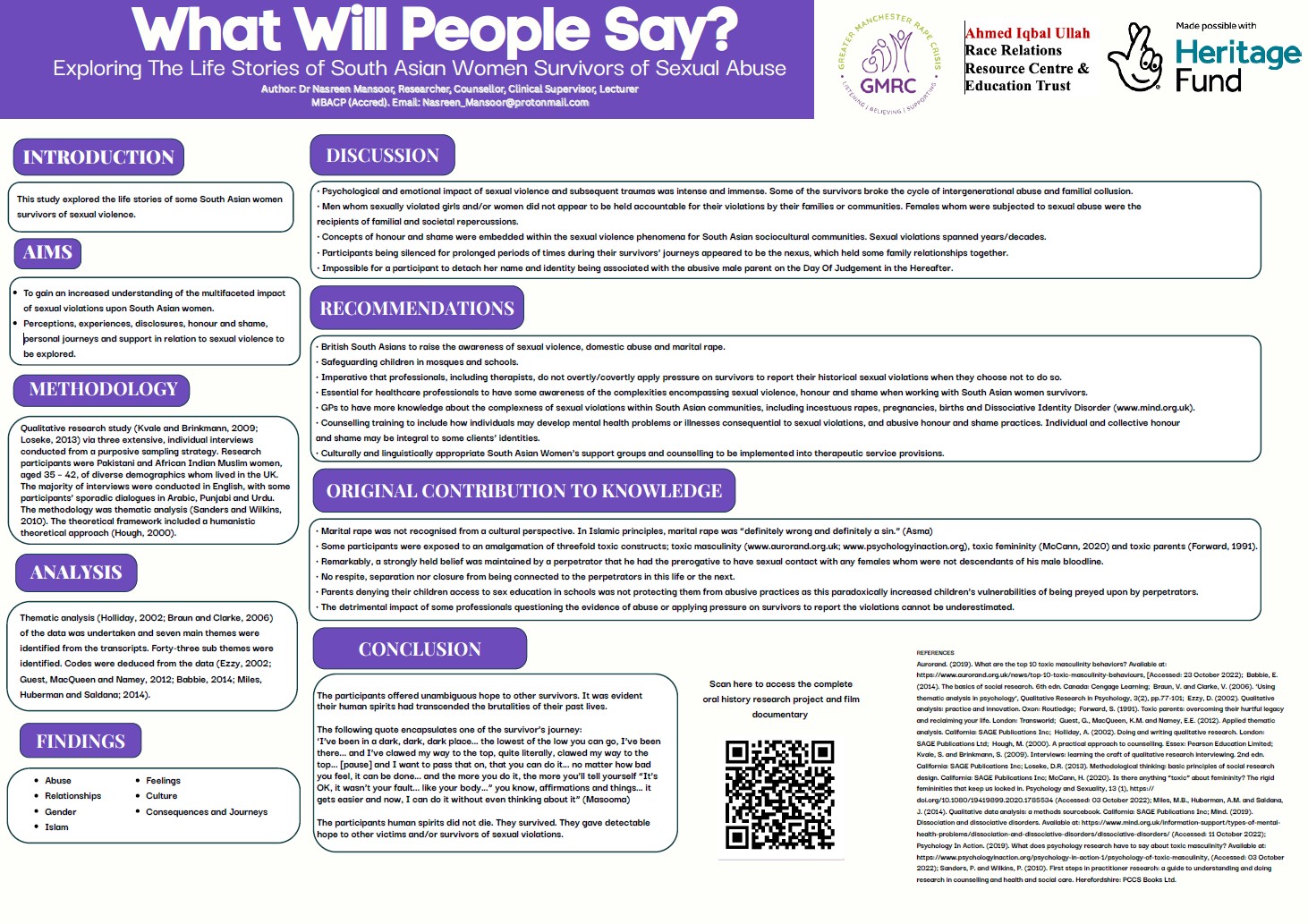
Aim and Purpose
- To gain an increased understanding of the multifaceted impact of sexual violations upon South Asian women.
- Perceptions, experiences, disclosures, honour and shame, personal journeys and support in relation to sexual violence to be explored.
Design and methodology
Qualitative research study (Kvale and Brinkmann, 2009; Loseke, 2013) via three extensive, individual interviews conducted from a purposive sampling strategy. Research participants were Pakistani and African Indian Muslim women, aged 35 – 42, of diverse demographics whom lived in the UK. The majority of interviews were conducted in English, with some participants’ sporadic dialogues in Arabic, Punjabi and Urdu.
The methodology was thematic analysis (Sanders and Wilkins, 2010). The theoretical framework included a humanistic theoretical approach (Hough, 2000).
Analysis
Thematic analysis (Holliday, 2002; Braun and Clarke, 2006) of the data was undertaken and seven main themes were identified from the transcripts. Forty-three sub themes were identified. Codes were deduced from the data (Ezzy, 2002; Guest, MacQueen and Namey, 2012; Babbie, 2014; Miles, Huberman and Saldana; 2014).
Views expressed in this article are the views of the writer and not necessarily the views of BACP. Publication does not imply endorsement of the writer’s views. Reasonable care has been taken to avoid errors but no liability will be accepted for any errors that may occur.